
Why Assassin's Creed Needs to Ditch Its Bloated Open World and Learn from Avowed
I've been playing Assassin's Creed Shadows a lot lately, and I have to admit, my feelings about it are... complicated. When it first came out, I was one of its biggest cheerleaders, defending it against a wave of criticism I thought was unfair. But now, in 2026, after spending dozens of hours with it, I can't ignore the truth. The same old problems that have been haunting the series since its RPG reboot are still there, lurking beneath a shiny new coat of paint. It's like meeting an old friend who's gotten a fancy new haircut but still tells the same boring stories. It's got me thinking—what if the next Assassin's Creed could be something truly different? What if it could learn from the games that are actually pushing the RPG genre forward?
One of the biggest promises of Shadows was that it would be a more focused experience. After the absolute behemoths that were Valhalla and Odyssey, we were told this would be a tighter, more curated adventure with a smaller map and a main story around 35 hours. Sounds perfect, right? A return to form, ditching the bloat. Well, here's the kicker—it doesn't feel that way at all. To me, Shadows still feels absolutely massive and, frankly, exhausting.
The controversial level-gating mechanic helps a bit at the start, forcing you to stick to certain areas, but that illusion shatters pretty quickly. Before long, you're over-leveled and the game just turns into a marathon simulator. You're constantly getting sent on these wild goose chases—'Go talk to this person 6000 meters away,' who then immediately says, 'Great, now go back 6000 meters in the other direction.' The map, while technically smaller than its predecessors, is still too big for its own good. It's packed, but not with meaningful content—just with vast stretches of pretty-looking nothing.
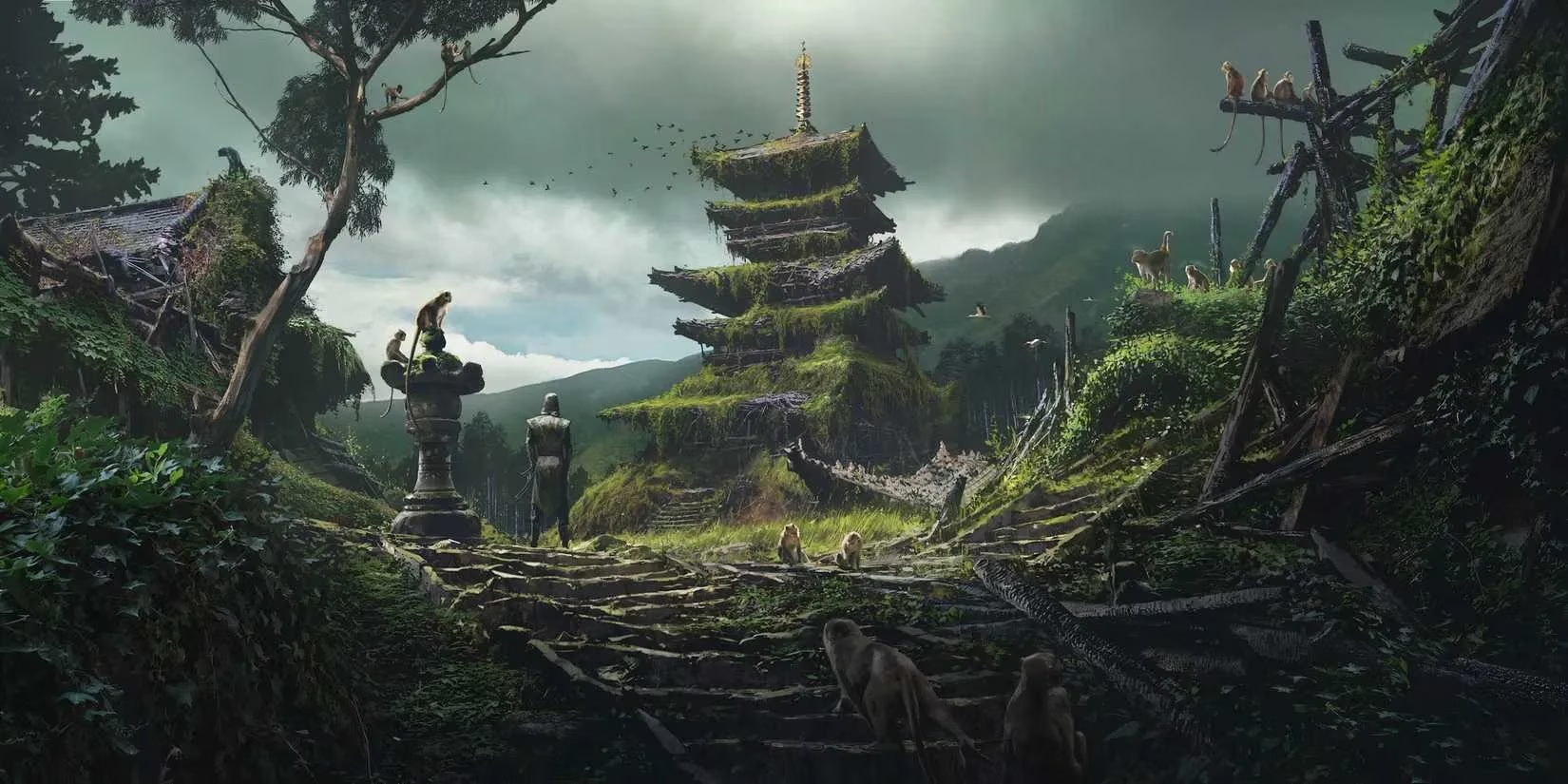
And that's the real shame of it. The world of Shadows is stunning, don't get me wrong. Ubisoft's artists are wizards. But beauty alone can't carry an experience. The landscape isn't diverse enough to justify its size. You're not journeying from snowy peaks to dense jungles; you're mostly seeing variations on the same feudal Japanese countryside. The side activities? You've seen them all within the first few hours. So what do you do? You fast-travel everywhere, missing the very world they spent so much time building. It's a self-defeating cycle.
Now, hear me out—I'm not saying Assassin's Creed should abandon exploration. That's its bread and butter! The magic of stepping into a meticulously recreated historical period is unlike anything else in gaming. It's living history. But what if we could keep that magic without the endless, tedious running?
I think the solution is staring us right in the face. Instead of one giant, interconnected open world, the series should adopt an open-area model. Think of it like a series of beautifully crafted, self-contained hubs or regions. This isn't a new idea for Ubisoft—they absolutely nailed it with Star Wars Outlaws. That game had multiple planetary zones, each one unique, packed with personality, and a joy to explore because they were focused. You got to know each area intimately.
This is where Avowed comes in. For my money, it was one of the best RPGs of 2025, and it's the blueprint the next Assassin's Creed should follow. Avowed ditched the traditional open world for distinct, hand-crafted open areas. The result? Every new zone felt like a genuine discovery.
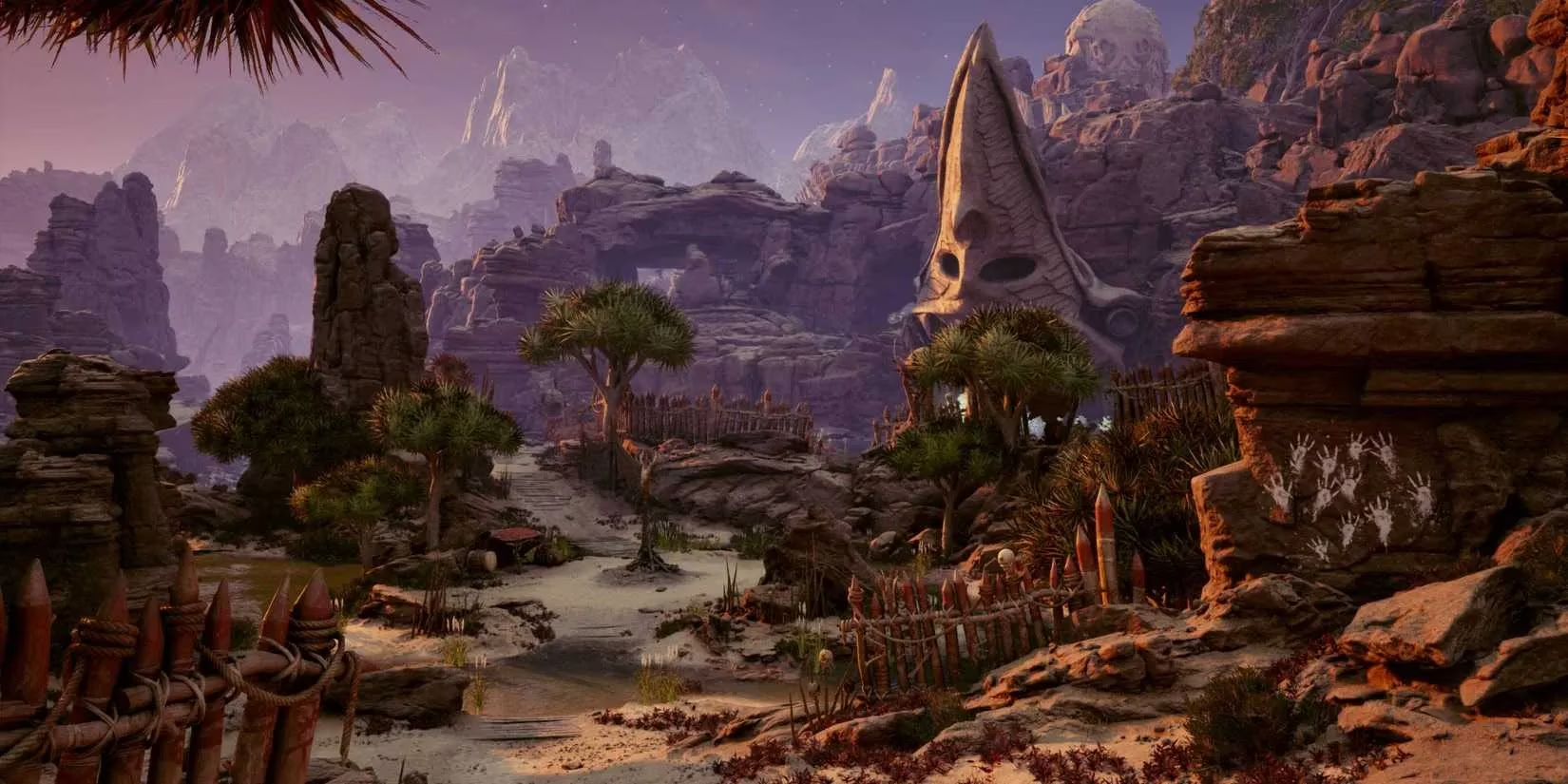
Let me break down why this open-area format is a game-changer for a series like Assassin's Creed:
-
Focused Detail & Lore: Smaller areas mean developers can pour more love into every nook and cranny. In Outlaws, this meant deep-cut Star Wars lore in every corner. For Assassin's Creed, this could mean historically accurate districts of Rome, Constantinople, or Victorian London that feel truly alive, not just big.
-
Radical Variety: With separate areas, you can have wild contrasts. One zone could be the bustling, crowded markets of a capital city. The next could be a misty, forested frontier. The next, a sun-baked desert or a frozen mountain pass. This keeps exploration fresh and surprising for dozens of hours.
-
Better Pacing & Content: Developers can design specific side quests and activities for each unique area. You won't find the same 'clear the bandit camp' quest copy-pasted 50 times across a single map. Each region has its own stories and secrets, making completion feel rewarding, not repetitive.
-
Grander Scope, Ironically: This model could actually let Assassin's Creed tell bigger stories. Imagine a game where your assassin travels across multiple countries or even an entire continent during a war. Instead of a scaled-down version of Europe, you get several detailed, authentic slices of France, Italy, and Egypt. It's a more believable and immersive way to handle globe-trotting adventures.
Look, I get it. The massive open-world Assassin's Creed is a comfort food for a lot of players. It's a familiar, blockbuster formula. But the series feels stuck. It's been iterating on the same template since Origins. Ubisoft has improved things—Outlaws had some neat faction systems—but it often feels like they're doing the bare minimum to check a box.
Switching to an open-area design isn't even abandoning the series' roots. Think back to Assassin's Creed II. That game wasn't one giant map; it was a series of incredible, distinct cities and regions—Florence, Venice, the countryside. Each felt special because they were designed as their own spaces. Avowed proves this philosophy still works brilliantly in modern RPGs. Its areas are rich with hidden secrets and unique encounters precisely because the developers could focus on filling a smaller, more detailed space.
I love Assassin's Creed. I want to be excited for its future. I want that feeling of discovering something new again. In 2026, with so many incredible, focused RPGs out there, the series' bloated open worlds are starting to feel like a relic. There's room between the giant releases for an experiment. For a game that takes inspiration from the best and dares to be different. Maybe the next journey shouldn't be across a vast, empty landscape, but through a series of unforgettable, postcard-perfect moments in history. Wouldn't that be something?
Comments