
The Illusion of Choice in Assassin’s Creed Shadows: Does Letting Junjiro Stay or Leave Matter?
The early hours of Assassin’s Creed Shadows waste no time in thrusting players into moral dilemmas that seem to carry the weight of narrative consequence. Barely has Naoe recovered from the brutal Onryo attack when she finds herself responsible for a young boy named Junjiro, whose fate appears to hang on a single dialogue choice. Presented with the option to let him remain at the Hideout or send him away, many players are left second-guessing their instincts. Will this decision shape the story in meaningful ways, or is it merely another thread in Ubisoft’s carefully woven illusion of agency?
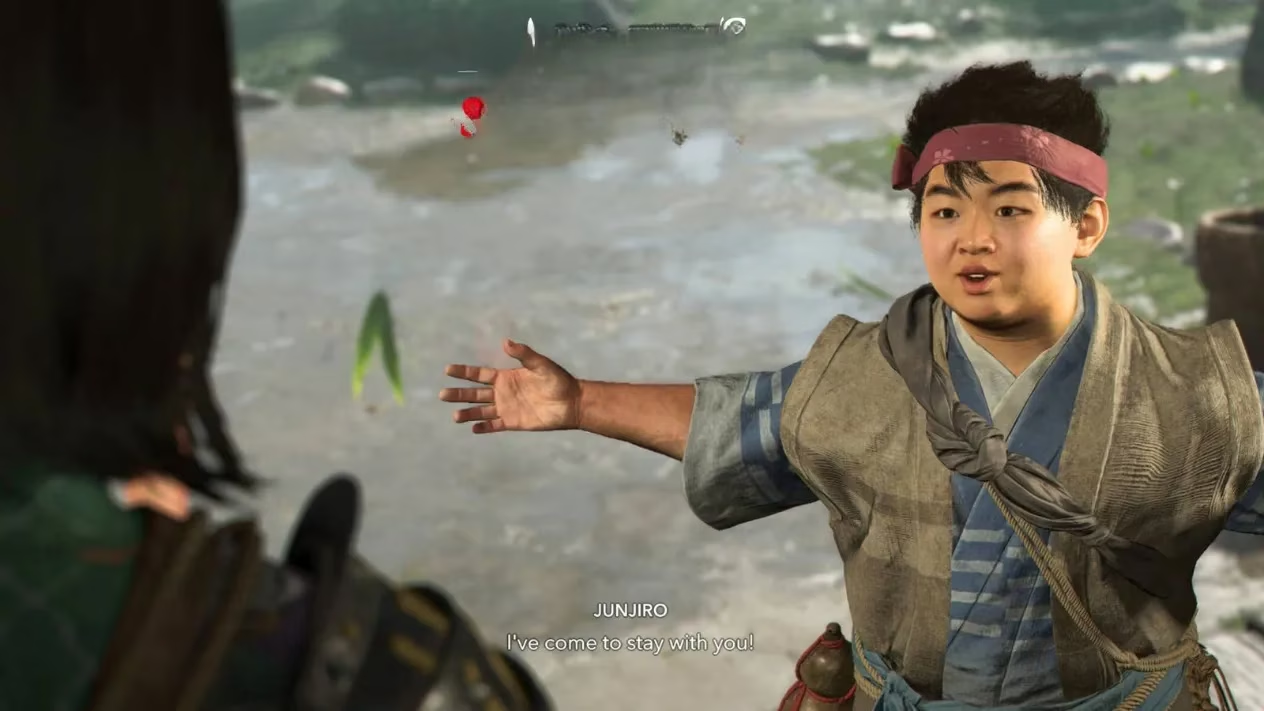
Before analyzing the consequences, it’s worth revisiting how Naoe meets Junjiro. After the opening ambush leaves her gravely injured, Sorin carries her to the Makinoodera Temple, where the kindly monk and young Junjiro nurse her back to health. The bond formed during this recovery period is quiet but palpable. So when Sorin later arrives at the Hideout with Junjiro in tow—announcing his pilgrimage and asking Naoe to look after the boy—the moment feels heavy with significance. Tomiko watches on, a skeptical guardian already burdened by the fledgling League, and the game pauses to offer a classic binary choice: “You can stay, Junjiro” versus “This is no place for a child.”
If the player embraces compassion and selects “You can stay, Junjiro,” the reaction is immediate and heartwarming. Junjiro’s face lights up, and he scurries joyfully into the Hideout, delighted to remain with Naoe. Tomiko sighs, half-jokingly querying whether they are now in the business of taking in strays, but she doesn’t stop him. Junjiro effectively becomes the first silent ally of the League, a quiet presence who helps stitch together the home base that will grow throughout the campaign. On the surface, this choice feels rewarding—it aligns with Naoe’s protective nature and seems to promise a deeper narrative bond later on.
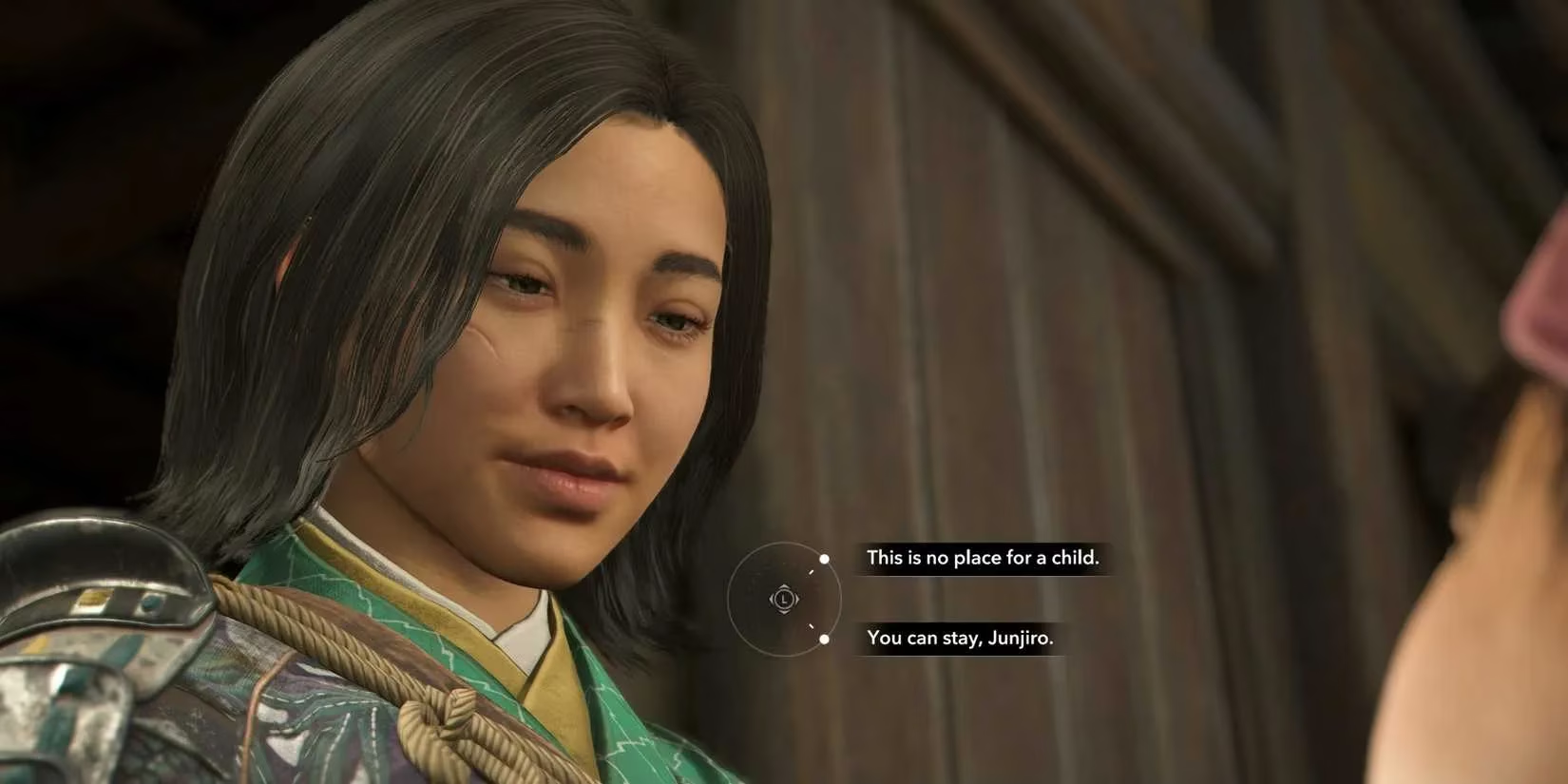
But what if the player hardens their heart and opts for the seemingly colder “This is no place for a child”? Naoe’s refusal is gentle but firm—she explains that the Hideout is not a temple, not a sanctuary shielded from danger, and that housing a child would place him in needless peril. Surprisingly, Sorin pushes back. He argues that safety is an illusion everywhere, and that at least with Naoe, Junjiro can be near someone who cares for him. The exchange ends, and a player might expect a poignantly sad departure. That departure never happens. Instead, Junjiro still stays. He remains at the Hideout, just as if the kinder option had been picked. The only difference is a few extra lines of dialogue that attempt to justify the outcome.
So here’s the burning question: does this choice actually matter? In narrative terms, the answer is a resounding no. Whether you welcome Junjiro with open arms or try to turn him away for his own good, he becomes a permanent fixture in the Hideout. No future questlines branch off from this moment; no character betrays you because you initially rejected him; no scene acknowledges the tension that might have lingered. The outcome is entirely fixed. This design philosophy isn’t new to modern RPGs—many games offer the illusion of choice to deepen immersion without splintering the story beyond manageable scope. In Assassin’s Creed Shadows, the Junjiro decision serves as an early signal that many such dilemmas will resolve identically, regardless of player input.
Why would the developers craft a choice that ultimately lacks consequence? One can argue it’s a way to let players role-play their version of Naoe without punishing them for it. Those who see her as a hardened assassin escaping a bloody past can voice that identity, while those who lean into her compassionate side get equal narrative satisfaction. The game acknowledges both perspectives emotionally, even if the mechanical outcome stays locked. It’s a gentle reminder that, much like in life, sometimes our decisions shape how we feel about a situation more than they alter the situation itself.
Nevertheless, the static nature of this choice can leave a curious aftertaste. Players who invested serious thought into whether a child belongs in an assassin’s hideout might feel slightly cheated upon realizing the boy stays no matter what. Does it undercut the stakes of future choices? Possibly. The game’s later hours do contain decisions with more tangible fallout—alliances that shift, characters who can live or die—but Junjiro’s introduction sets a precedent. It whispers: “Choose freely, but know the tale is already written.”
For completionists and lore enthusiasts, it’s useful to note that Junjiro’s presence functions primarily as a base-building element. He doesn’t become a combat companion or an active quest-giver. His role is atmospheric: a child’s voice echoing through the Hideout, a small figure practicing with a wooden sword, a reminder that Naoe’s fight is for more than just vengeance. In this sense, the choice not to have a choice arguably reinforces the game’s themes. Naoe cannot simply walk away from her responsibility to protect those who can’t protect themselves, no matter how dangerous her path becomes.
So, should you let Junjiro stay or make him leave? Ultimately, it doesn’t matter—but there’s a certain pleasure in discovering that for yourself. Go ahead and pick the dialogue that best suits your Naoe. Whether she’s a reluctant guardian or a ready protector, Junjiro will be there, a quiet constant in a world of chaos. And if that realization makes you smile, or perhaps roll your eyes, you’ve already engaged with the game’s deeper design: choices that shape not just a story, but how you inhabit the character within it. ✨
Comments