
How Assassin’s Creed Shadows Redefines the Series' RPG Worlds
You know that feeling when you step into a new Assassin’s Creed game and just get lost in the historical atmosphere? Whether it was the dusty bazaars of Damascus or the sun-bleached rooftops of Renaissance Florence, the series has always excelled at transporting players to a meticulously crafted moment in time. But since 2017, the franchise has evolved dramatically—swelling into massive, open-world RPGs that beg you to explore every hidden corner.
As of 2026, Assassin’s Creed Shadows remains the latest and most refined entry in this RPG lineage, and after spending countless hours scaling pagodas, prowling through bamboo groves, and dueling samurai in feudal Japan, it’s clear this game was built with a very specific philosophy: sometimes a smaller world, if it’s alive, beats a gigantic one that feels static.
The Journey from Origins to Shadows
The RPG era truly began with Assassin’s Creed Origins in 2017, which swapped the series’ classic stealth-action blueprint for loot, leveling, and a sprawling re-creation of Ptolemaic Egypt. Then came Odyssey in 2018—a sun-bleached Greek epic developed by Ubisoft Quebec—and Valhalla in 2020, a Norse saga that stretched from the fjords of Norway to the rolling green hills of England. (Mirage in 2023 was more a love letter to the old formula, so fans don’t really group it with these expansive RPG behemoths.)
Ubisoft Quebec returned to the director’s chair for Shadows, and they clearly learned some valuable lessons from Odyssey. They didn’t try to one-up their previous game in terms of raw square kilometers. Instead, they doubled down on depth and reactivity. As Creative Director Jonathan Dumont revealed back in 2024 and as comparison experts like YouTuber DG VFX later confirmed, Shadows’ world spans about 84 square kilometers. That makes it the fourth-largest map in the series—comfortably ahead of Origins but trailing the monster maps of Valhalla, Black Flag, and Odyssey (which tops the chart at 130 km², thanks largely to the Aegean and Mediterranean seas).
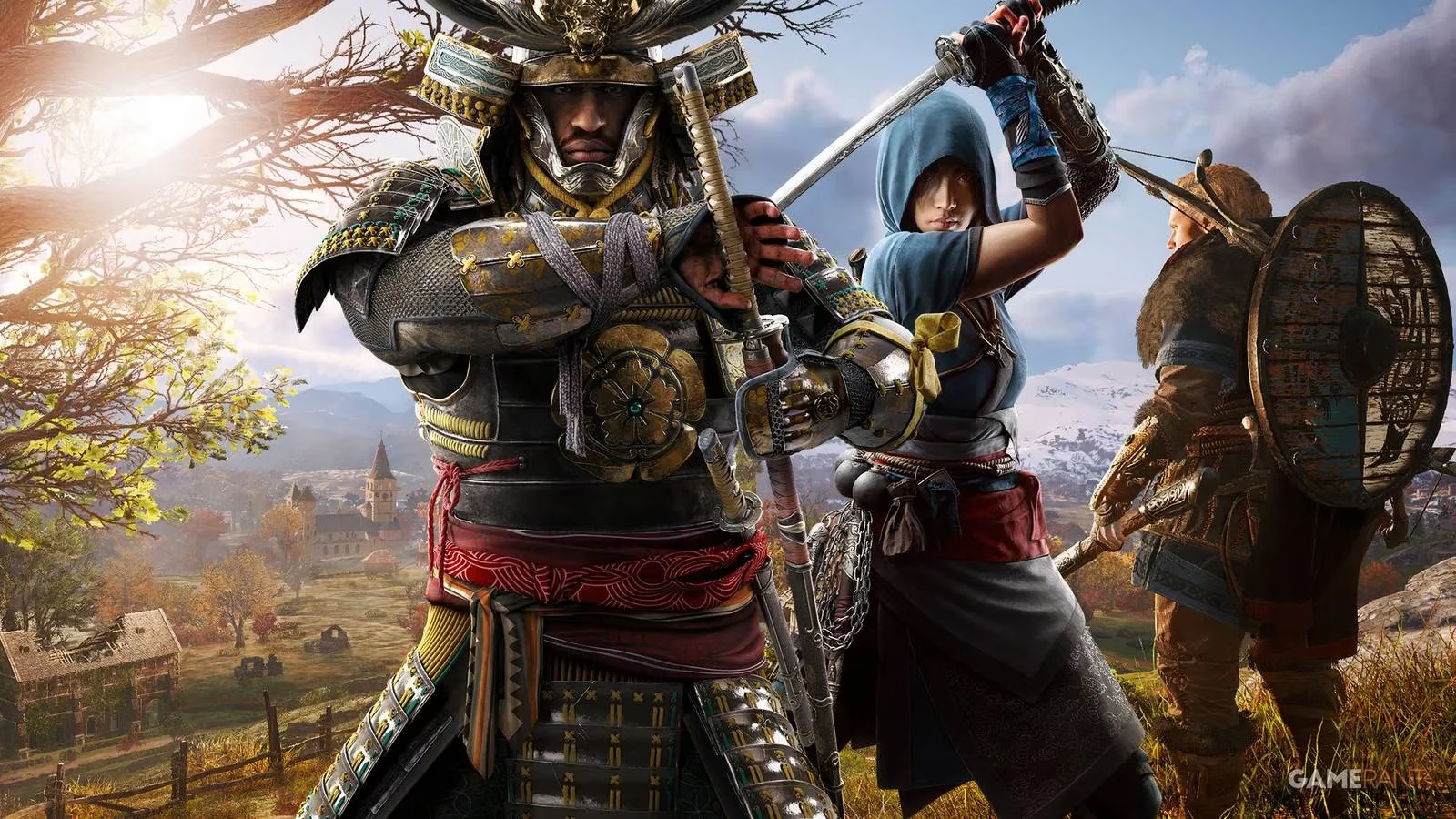
If you’ve ever sailed for what felt like an eternity in Odyssey or Black Flag, you know that a huge chunk of those “largest maps” is just open water. Shadows removes all that aquatic filler. Instead, it delivers nine dense provinces in central Japan during the late 16th century: Wakasa, Omi, Iga, Yamato, Kii, Settsu, Harima, Tamba, and Yamashiro. Every valley, every castle, and every quiet village feels hand-sculpted and purposeful.
Where the Map Truly Comes Alive 🌸❄️
Here’s the game-changer: the world of Shadows refuses to sit still. In Origins and Odyssey, the environments were gorgeous but ultimately passive—you’d get the occasional sandstorm in the desert, and day would slowly fade into night, but the landscape itself never really reacted to your journey. Even Valhalla, with its snow-capped peaks and misty forests, kept the seasons frozen in place. Ubisoft Quebec saw this as a missed opportunity and built a dynamic seasonal system that fundamentally rewires how you play.
In Shadows, the story unfolds across multiple years, and as you progress, the seasons cycle organically through spring, summer, fall, and winter. Each season doesn’t just repaint the scenery; it alters gameplay in meaningful ways:
🌱 Spring brings blooming sakura trees and mild weather, with citizens happily going about their daily routines. Perfect for blending in.
☀️ Summer sees the world bathed in harsh sunlight, making long-range sniping easier but leaving fewer shadows to hide in during the day.
🍂 Fall carpets the ground with crunchy leaves—beautiful, but dangerously noisy if you’re trying to sneak up on a target.
❄️ Winter is where the system truly shines. Deep snow forces Naoe and Yasuke to trudge slowly through fields, leaving visible footprints that enemies can track. However, frozen lakes and rivers suddenly become new pathways, and blizzards reduce visibility for guards.
On top of the seasonal rhythm, dynamic storms roll in unpredictably. A sudden downpour will muffle your footsteps, turning a heavily guarded castle into a playground for silent assassinations. Lightning flashes can momentarily blind sentries, and fierce winds disrupt their patrol patterns. It’s a level of environmental interactivity the series has never seen before, and it makes every infiltration feel fresh—even when you’re revisiting the same stronghold.
The Bigger Picture for RPG Creed Fans 🎮
Some players might initially balk at the numbers: only 84 km²? After the sprawling Greek islands of Odyssey, that sounds modest. But in the hundreds of hours I’ve spent with Shadows, I’ve rarely felt the map was too small. Instead, it feels dense. There are no endless stretches of empty desert or repetitive grasslands. Every path leads to a hidden shrine, a bandit camp layered with vertical infiltration options, or a side quest that reveals a new cultural detail about Sengoku-era Japan.
Ubisoft Quebec’s approach sets an exciting precedent for the future of the series. The era of simply making maps bigger is over. Shadows demonstrates that a reactive world—one that changes its rules based on the time of year, the weather, and even the lighting conditions—can offer deeper replayability than a static continent. By 2026, with the game having matured through updates and community feedback, it stands as a brilliant example of how intelligent design beats raw scale. So, if you’re still on the fence, grab your hidden blade and a warm cloak. Feudal Japan’s seasons are waiting, and they have never looked this alive.
Comments