
Ghost of Tsushima vs. Assassin's Creed: Shadows: A 2025 Comparison of Feudal Japan Adventures
Standing before the vast landscape of gaming in 2025, a player eager to explore the rich history and drama of feudal Japan faces a compelling choice: should they embark on the honorable, cinematic journey of Ghost of Tsushima or dive into the expansive, customizable world of Assassin's Creed: Shadows? Both titles have carved their own legendary paths through the era of samurai and shinobi, yet they offer fundamentally different experiences. One presents a focused, artistically driven tale of a single warrior's transformation, while the other delivers a sprawling, reactive sandbox shaped by two protagonists. The decision is not about which game is objectively superior, but which philosophy of adventure aligns with the player's desires. Is it the purity of a single, masterfully told story, or the freedom of a world that bends to your choices?
⚔️ Combat System

When steel meets steel, the philosophies of these two games diverge sharply. Ghost of Tsushima's combat is widely celebrated as a benchmark for melee action. It is a ballet of precision and power, where every clash feels significant. The system is built on fluid swordplay, cinematic finishers, and a strategic stance system that forces players to adapt their style to different enemy types. Fighting a group doesn't feel chaotic; it feels like a calculated dance where you control the rhythm. Each successful standoff and perfect parry delivers immense satisfaction, making you feel like a true master of the blade.
In contrast, Assassin's Creed: Shadows, while offering a solid foundation with its own dramatic finishers and pre-fight tension, often struggles with consistency. The combat can feel clunky, and a common criticism is the tendency for enemies to engage one at a time, which diminishes the sense of urgency and challenge found in Ghost of Tsushima. It's a system that prioritizes accessibility and RPG progression over the tight, skill-based mastery of its competitor.
| Aspect | Ghost of Tsushima | Assassin's Creed: Shadows |
|---|---|---|
| Core Feel | Fluid, cinematic, strategic | Functional, RPG-driven, sometimes clunky |
| Enemy Engagement | Dynamic group combat | Often sequential, one-by-one |
| Player Satisfaction | High (from precision & style) | Moderate (from progression & customization) |
🥷 Stealth Mechanics

If combat belongs to Ghost of Tsushima, the shadows are the domain of Assassin's Creed: Shadows. This category highlights a key difference in design philosophy: one game treats stealth as a narrative tool, the other as a complex gameplay pillar.
Assassin's Creed: Shadows boasts dynamic and complex stealth mechanics. Its level design encourages—and often requires—the use of gadgets, environmental manipulation, and careful observation of patrol patterns. The AI is more vigilant, the animations for takedowns are varied, and the verticality of the world offers countless approaches. Each infiltration feels like solving a puzzle, making successful stealth sequences deeply rewarding.
Ghost of Tsushima's stealth, while serviceable and thematically fitting for Jin's "Ghost" persona, is notably simpler. The tools (like kunai and smoke bombs) are fun but seldom feel essential. The enemy AI can be forgiving, sometimes looking away from obvious paths, and the assassination animations, though cool, become repetitive. Stealth here is more of an atmospheric choice than a deep mechanical challenge.
📖 Story & Narrative Depth

Both narratives are tales of revenge set against a backdrop of war, but they weave their stories in profoundly different ways. Ghost of Tsushima excels in narrative integration. The story isn't just told in cutscenes; it's lived through gameplay. You experience Jin Sakai's moral descent firsthand—from a samurai who despises dishonorable tactics to a warrior who will use any means necessary to save his home. This erosion of honor is a slow, gameplay-driven burn that makes the story resonate during every mission and side activity. The narrative is tight, personal, and consistently impactful.
Assassin's Creed: Shadows offers an ambitious dual-protagonist story, following the samurai Yasuke and the shinobi Naoe. While this premise is rich with potential and the individual character arcs have merit, the narrative can feel bloated. The pacing is often interrupted by the sheer volume of side content and the game's open-world structure. The story is beautiful in moments, but it sometimes gets overshadowed by the scale of the world around it.
🎨 Visuals & Art Style
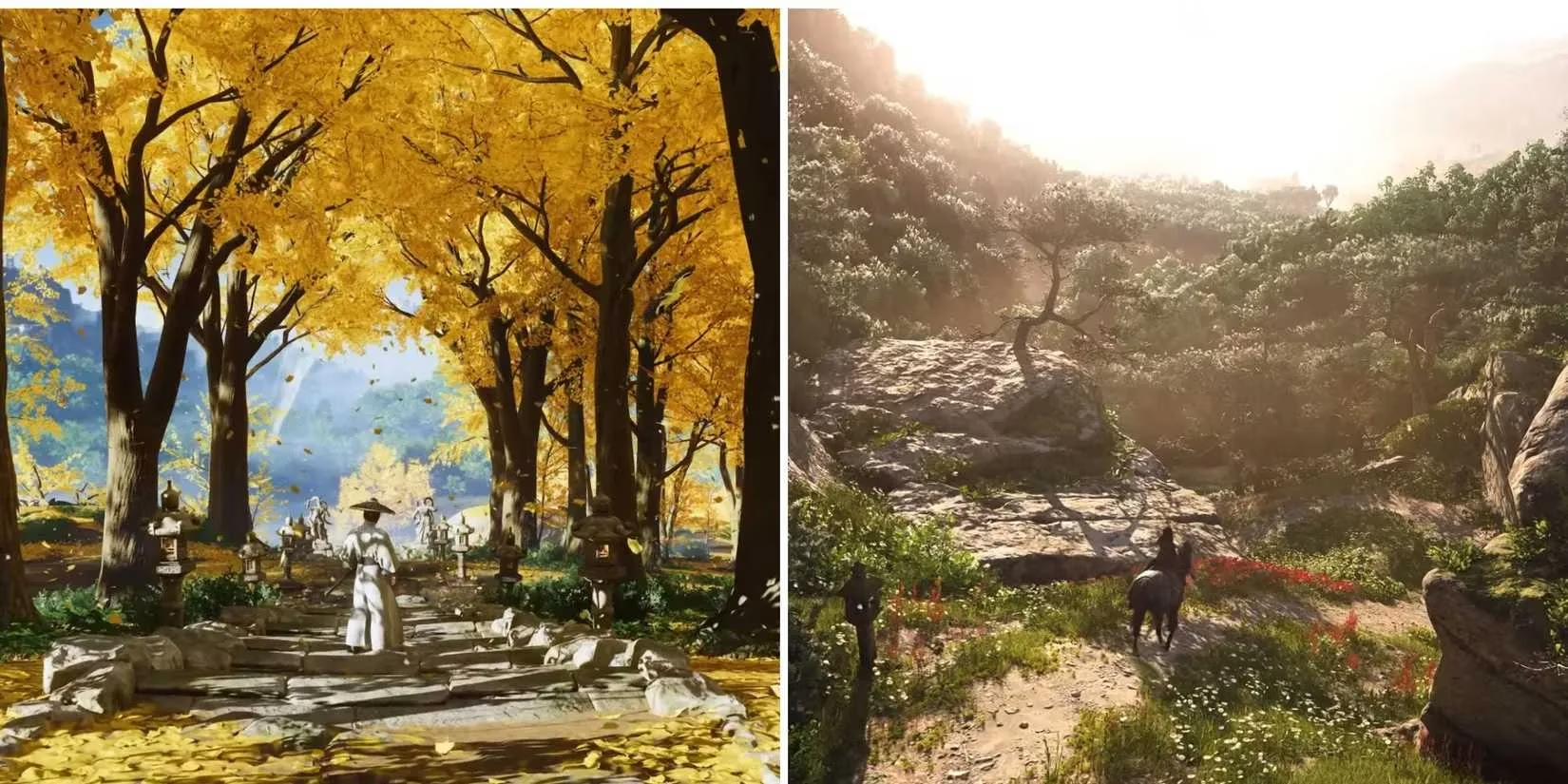
This is perhaps the most striking contrast between the two games. Ghost of Tsushima is a moving painting. It forsakes strict realism for a breathtaking, artistic interpretation of feudal Japan. Golden sunsets filter through bamboo forests, crimson leaves swirl in the wind, and fields of white pampas grass create scenes of divine beauty. The game actively encourages you to stop and admire its vistas, using a photo mode that feels like a core feature. Its visual design is an integral part of its identity and emotional impact.
Assassin's Creed: Shadows pursues a different goal: historical authenticity and graphical fidelity. Its world is graphically superior in terms of raw detail, texture quality, and environmental density. It aims to recreate a believable, living Japan. However, this pursuit of realism can come at the cost of the consistent, cinematic artistry that defines Ghost of Tsushima. It's a visually impressive world, but one that may not leave the same lasting, painterly impression.
🏯 Cultural Authenticity & Tone
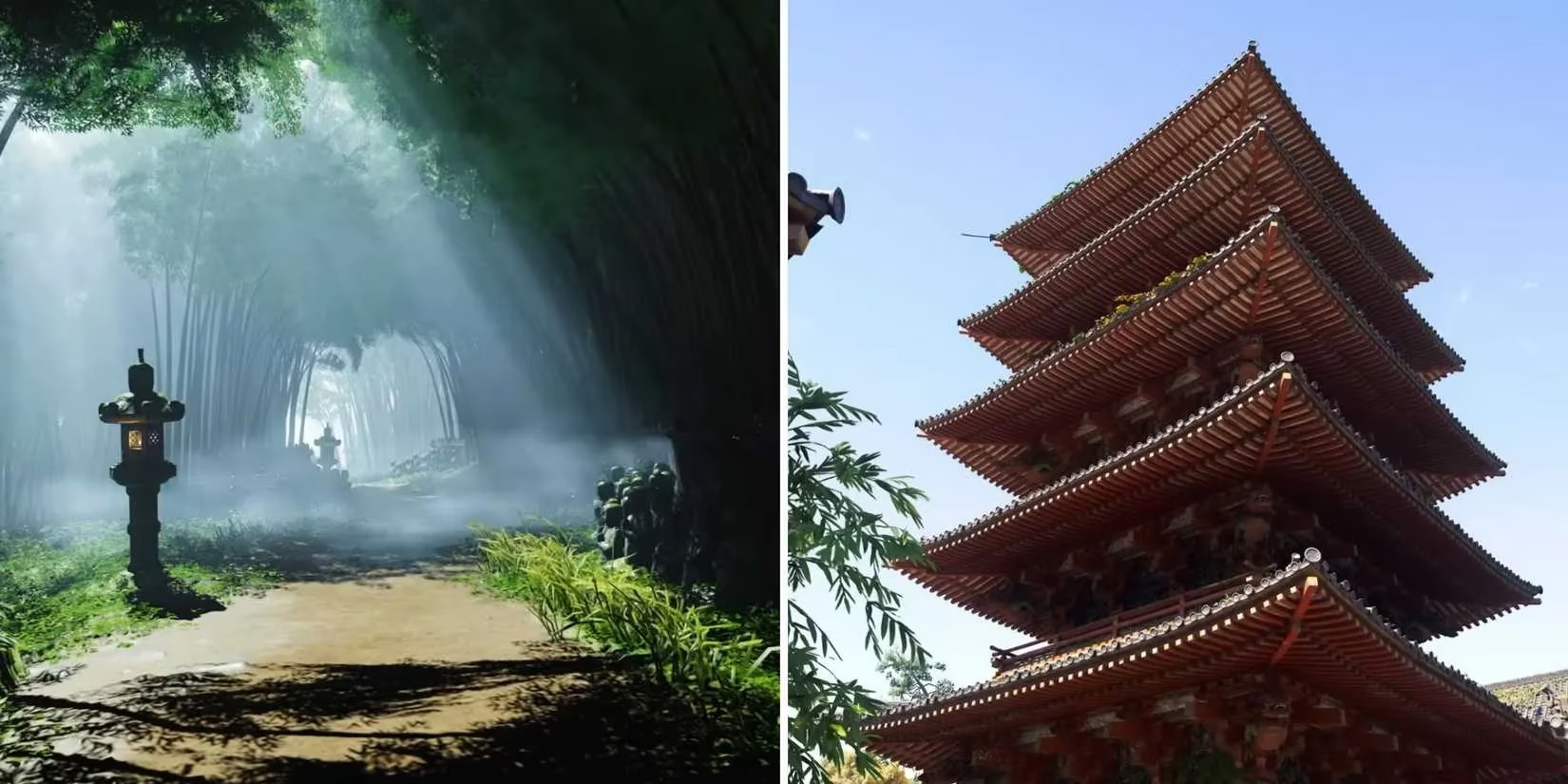
How do these games handle the weight of their setting? Ghost of Tsushima doesn't just depict feudal Japan; it seeks to embody the samurai ethos of honor, duty, and sacrifice. This tone is woven into every aspect, from the respectful haikus Jin composes to the way the story grapples with the conflict between tradition and necessity. It feels like a love letter to samurai cinema, committed to its central themes.
Assassin's Creed: Shadows delivers exceptional worldbuilding, with meticulously researched architecture, clothing, and social structures. However, its tone is more that of a historical action-adventure. The inclusion of Yasuke, while historically inspired, shifted the narrative focus and sparked discussion. The game uses its setting as a rich backdrop for its conspiracy-driven Assassin's Creed plot and dual-character drama, rather than making the cultural milieu the central thematic driver.
👘 Customization
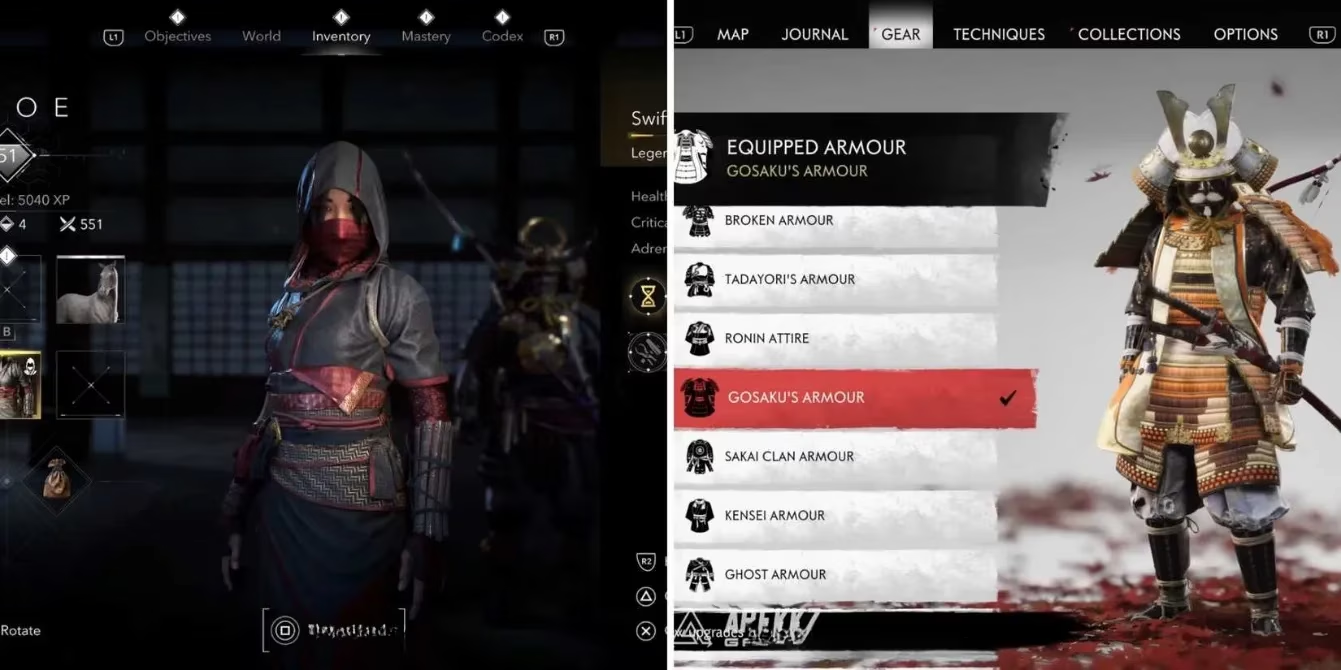
For players who love to tweak and personalize their experience, this category is decisive. Assassin's Creed: Shadows offers near-endless customization. With two protagonists, each with unique gear slots, players can modify everything from headgear to footgear. Armor pieces have stats and can be dyed different colors, allowing for both functional builds and fashion statements. The RPG systems ensure that your choices in gear directly impact your playstyle.
Ghost of Tsushima takes a minimalist approach. While you can find and upgrade various armor sets, each with distinct perks and aesthetics, and apply dyes, the system is less about stat optimization and more about choosing an outfit that fits your current narrative moment or preferred combat style. This simplicity aligns perfectly with the game's focused, art-driven tone but offers far less granular control than its competitor.
🎮 RPG Systems

This is a category of distinct philosophies rather than a clear winner. Assassin's Creed: Shadows is a full-fledged action RPG. It features deep skill trees for both characters, complex gear with stat rolls, and meaningful character builds. Changing your equipment or skills can fundamentally alter how you approach combat, stealth, and exploration. The game is built for players who enjoy number-crunching and incremental progression.
Ghost of Tsushima is a "lite" RPG. It has skill points, weapon upgrades, and a modest crafting system, but these elements are streamlined. Upgrades generally make you more effective or unlock new abilities rather than forcing you to manage complex stats. The focus remains squarely on the core combat and the narrative, avoiding menus that might break immersion. So, which is better? It depends entirely on whether you prefer deep systemic progression or a smooth, uncluttered power curve.
🔄 Side Content & Replay Value
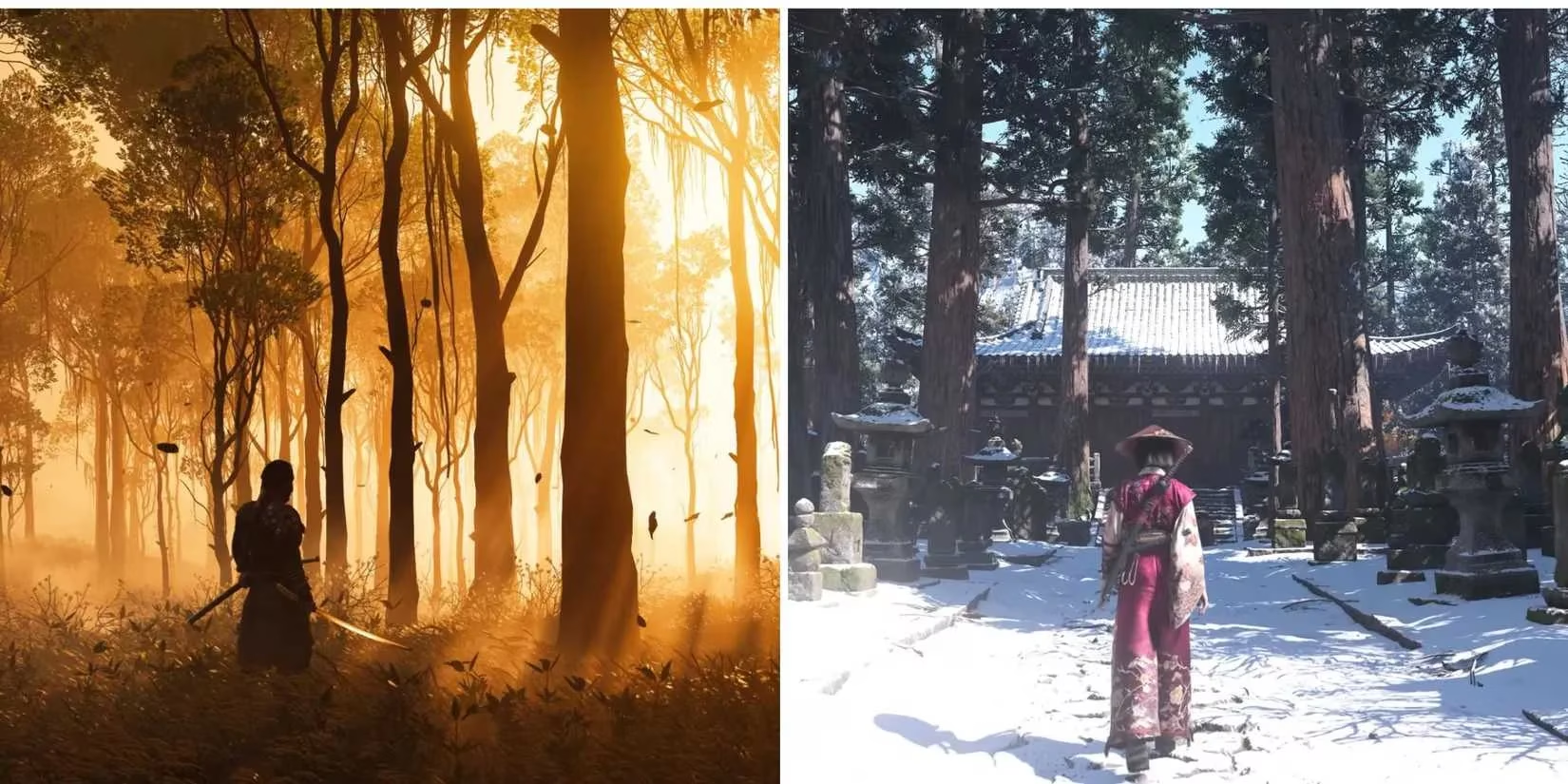
Long-term engagement is a key consideration. Assassin's Creed: Shadows is built for replayability. Its sheer volume of content is staggering:
-
Dynamic world events and faction quests.
-
Seasonal changes that visually transform the world and alter mission parameters.
-
The dual-protagonist system encourages at least two playthroughs to experience the story primarily through each character's eyes.
-
A longer main story and a denser map filled with activities.
Ghost of Tsushima offers high-quality side content, particularly its "Mythic Tales," which are multi-part stories inspired by Japanese folklore. However, the quantity is less, and the activities (fox dens, haiku spots, hot springs) are more about atmospheric world-building than varied gameplay. Its replay value lies more in the mastery of its superb combat and the desire to re-experience its cinematic story, rather than in discovering vast amounts of new content.
🎬 Cinematic Presentation
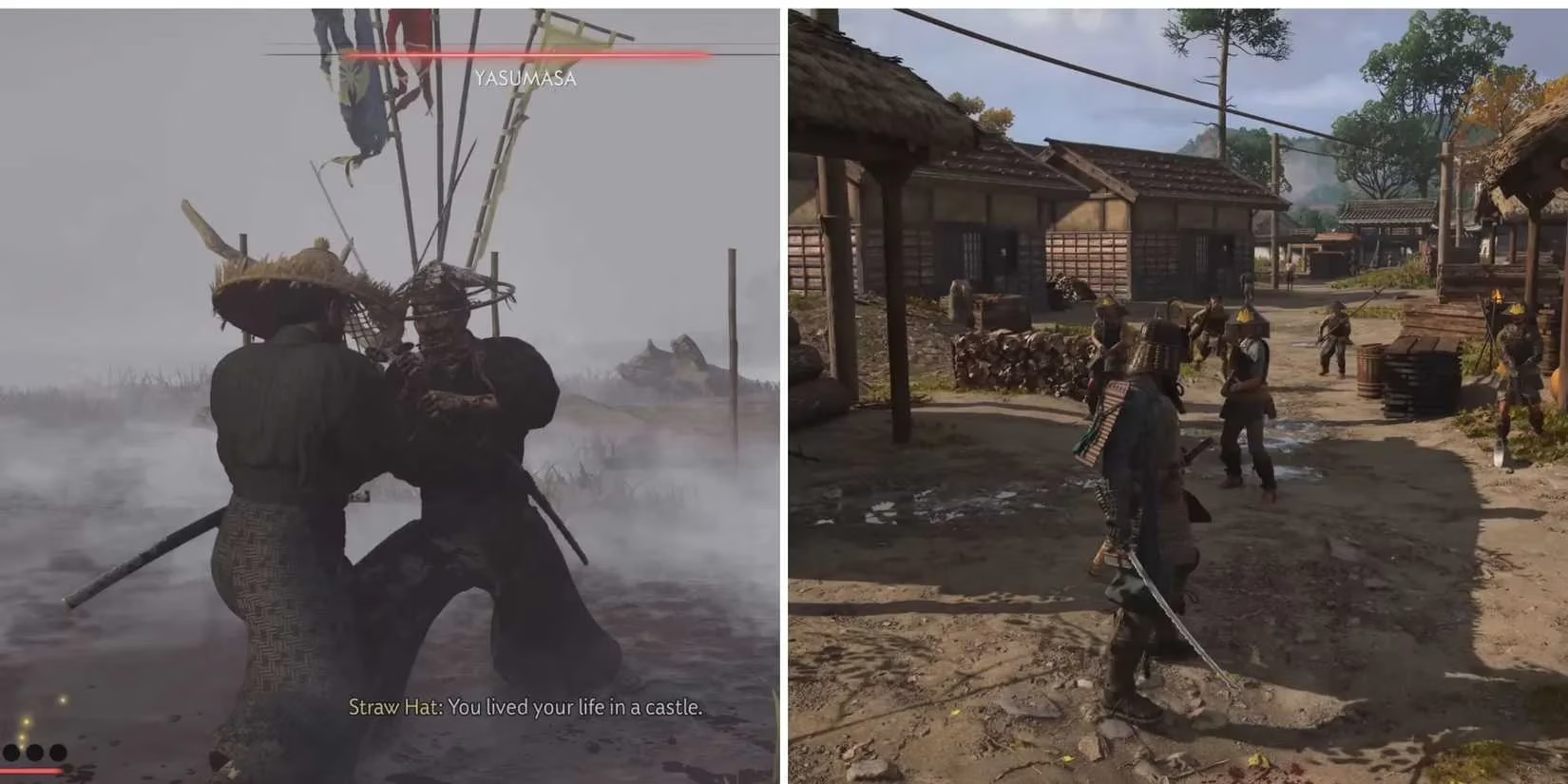
Few games in 2025 match Ghost of Tsushima's mastery of cinematic presentation. It is designed to make you feel like you're inside a Kurosawa film (even offering a dedicated black-and-white "Kurosawa Mode"). Key features include:
-
A minimalist, immersive HUD: The game famously uses the direction of the wind, guiding birds, and visual cues instead of map markers.
-
Seamless transitions between gameplay and cutscenes.
-
Dramatic, fixed camera angles during duels that heighten tension and style.
Assassin's Creed: Shadows, while having impressive cutscenes, maintains a more traditional video game presentation. It uses a standard UI with quest markers, health bars, and objective text. Control is often returned to the player more abruptly after scenes. This approach offers clarity and player agency but sacrifices the relentless, director-driven immersion of Ghost of Tsushima.
🌍 Immersion & Interaction
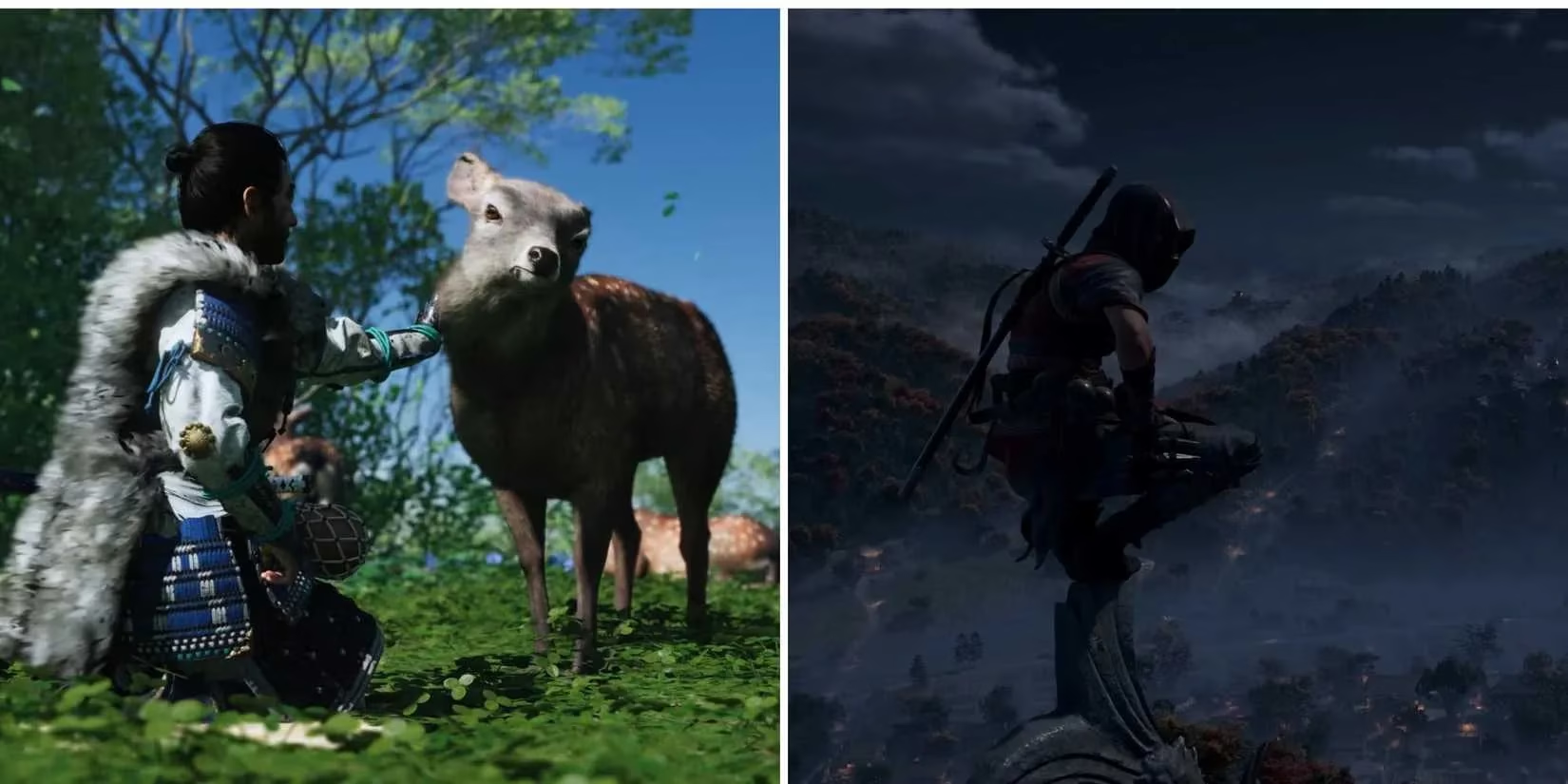
Finally, how do these worlds feel to inhabit? Assassin's Creed: Shadows creates a world that feels alive and reactive. Its cities are bustling with NPCs who have daily routines and react to the player's presence (especially to Yasuke). The environment is dense with foliage and interactive elements. Most importantly, its seasonal cycle dynamically changes the world—affecting terrain, enemy patrols, and mission availability—which makes the world feel like a living, breathing entity.
Ghost of Tsushima's immersion is of a different kind. It is an atmospheric and aesthetic immersion. The world is stunningly beautiful but often sparsely populated, reflecting its war-torn setting. Interaction beyond scripted activities (like composing haikus or following foxes) is limited. The immersion comes from the feeling of being a lone warrior in a vast, beautiful, and melancholic landscape, not from interacting with a complex social simulation.
Conclusion: Two Paths Through Feudal Japan
The debate between Ghost of Tsushima and Assassin's Creed: Shadows ultimately reveals two brilliant but different visions for a historical action game.
-
Choose Ghost of Tsushima if you seek: A focused, cinematic, and emotionally resonant story. You value masterful, satisfying combat and a world that is a work of art. You prefer a curated experience where every element serves the narrative and tone.
-
Choose Assassin's Creed: Shadows if you seek: A vast, systemic sandbox with deep RPG customization. You love stealth as a complex gameplay pillar and want a world that feels dynamic and alive, changing with the seasons. You value player agency, build variety, and hundreds of hours of content.
In 2025, players are fortunate to have both. One is a masterfully crafted samurai epic, a focused and beautiful blade. The other is a sprawling ninja toolkit, offering endless possibilities in a living world. The best choice depends entirely on which version of the legendary era calls to you.
Comments