
From Shadows to Yotei: Why One Player Abandoned Assassin's Creed for the Ghost's Return
In the sprawling world of video games set in feudal Japan, players often find themselves torn between different interpretations of the era. One such player, after dedicating fifteen long hours to Ubisoft's Assassin's Creed Shadows, found themselves at a crossroads. The setting was a dream—the iconic landscapes and samurai lore they adored from Ghost of Tsushima—but something just didn't click. The game felt like trying to fit a square peg into a round hole; the pieces were there, but the connection never sparked. They persisted, hoping the magic would appear, but it remained frustratingly out of reach. Then, in 2026, a trailer for Ghost of Yotei dropped, and just like that, the decision was made. It was time to move on. Sorry, Shadows—this friendship had run its course. A new adventure was calling.
An Unflattering Comparison: Style vs. Substance
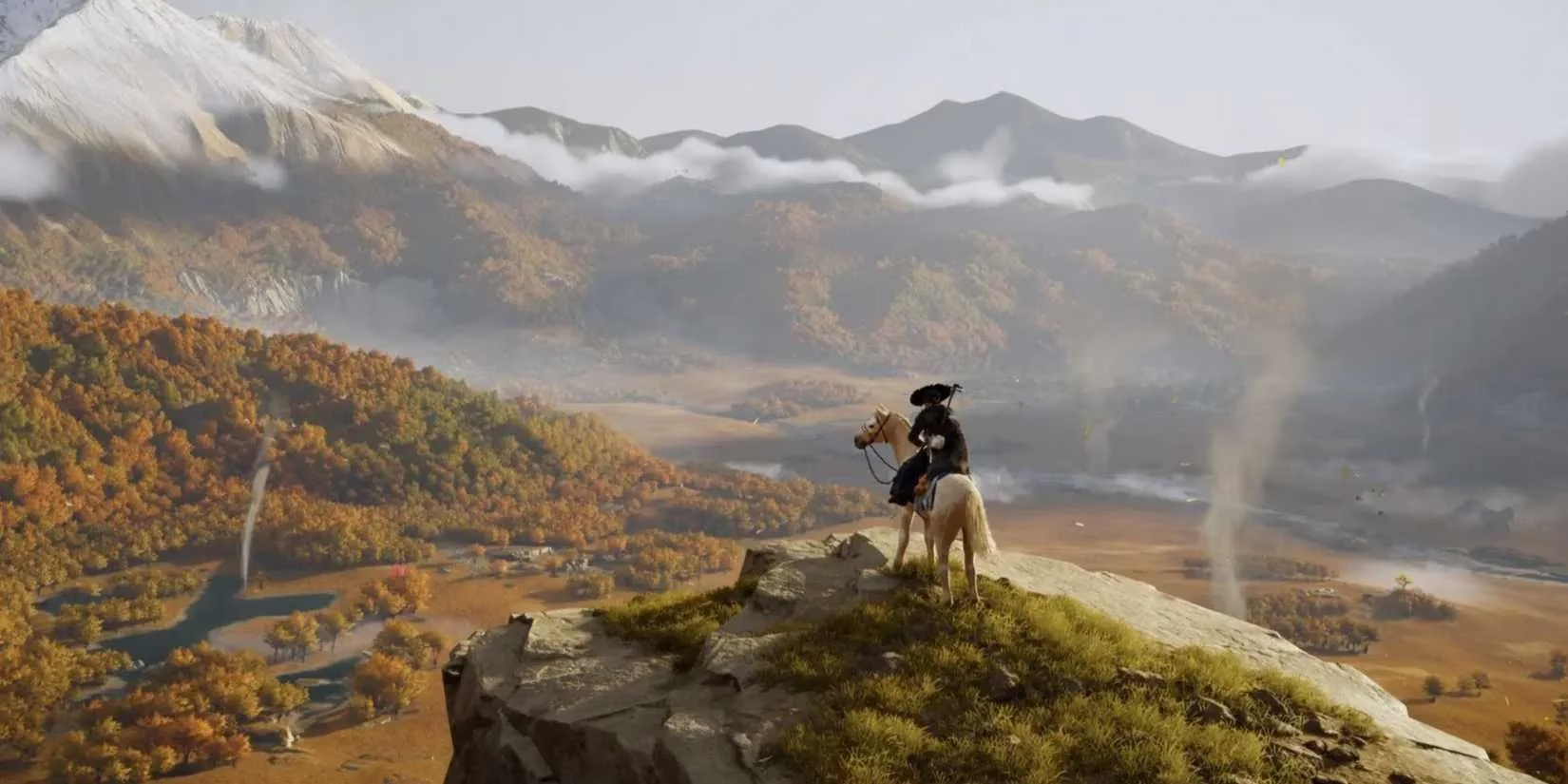
When Ghost of Tsushima first launched back in 2020, it was almost impossible not to draw parallels with the Assassin's Creed franchise. On the surface, the similarities were obvious: open-world exploration, stealth mechanics, and historical settings. But where Tsushima truly shined was in its soul. Its combat wasn't just about button-mashing; it was a delicate, almost poetic dance of blades, requiring players to read their opponents and switch stances strategically. Fast forward to Assassin's Creed Shadows, and that nuance seemed to have evaporated. The combat, while flashy, felt… well, kinda shallow. Parry, attack, repeat—with animations that got old faster than yesterday's news. Exploration, too, felt different. Tsushima guided players with the wind and natural beauty, while Shadows often relied on a cluttered map filled with icons. It was the difference between a guided tour through a serene garden and navigating a busy marketplace with a loudspeaker.
Ready for the Main Course: Anticipation Shifts
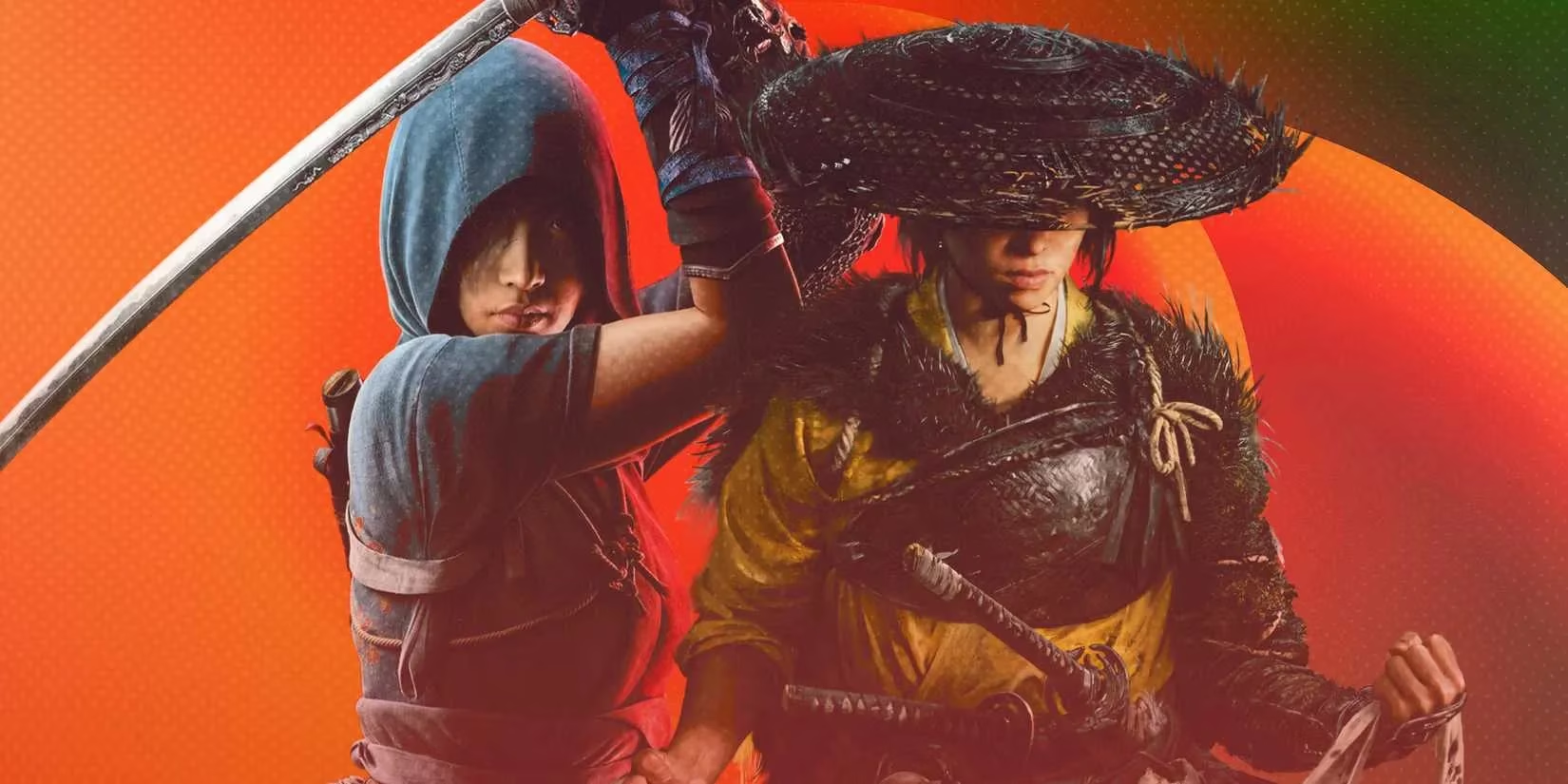
The announcement of Ghost of Yotei's release date was the final nail in the coffin for this player's patience with Shadows. Knowing that Sucker Punch's follow-up was arriving in October 2026 made continuing with Ubisoft's offering feel like settling for an appetizer when the main course was already in sight. Sure, Shadows might improve with patches—these games often do—but the motivation to check off more assassination targets had vanished. It's not that there isn't room for both games; the feudal Japan setting is vast enough for multiple stories. But when it comes to personal attention, the pull of a developer with a proven track record in narrative and gameplay depth was simply stronger. The heart wants what it wants, you know?
The Tale of Two Revenge Plots
At their core, both games share a similar premise: a quest for vengeance. Ghost of Yotei follows Atsu, a woman hunting six masked villains who destroyed her family. Assassin's Creed Shadows features Naoe on a strikingly similar path. Yet, for our player, the execution made all the difference. In Shadows, the revenge plot felt let down by its presentation—the writing and voice acting failing to deliver the emotional weight the story demanded. The framework for a great tale was there, but it just… fell flat. Looking at Sucker Punch's history with Ghost of Tsushima, which masterfully balanced heart-wrenching narrative with exhilarating gameplay, hope soared that Yotei would deliver where Shadows stumbled. Sometimes, it's not about the story you tell, but how you tell it.
Gameplay Philosophies: Complexity vs. Simplicity
Let's break down the key differences that led to this gaming divorce:
| Feature | Assassin's Creed Shadows | Ghost of Yotei (Based on Tsushima Legacy) |
|---|---|---|
| Combat Core | Parry-focused, repetitive animations | Stance-based, requiring enemy assessment |
| Exploration | Icon-heavy maps, guided objectives | Environmental cues (wind, animals), organic discovery |
| Narrative Delivery | Functional but lacking emotional depth | Cinematic, character-driven (expected) |
| World Feel | Dense, checklist-oriented | Atmospheric, contemplative |
For a player seeking depth, the promise of Yotei's likely more complicated sword-fighting system—where you must truly learn your enemy—was far more appealing than Shadows' simpler, more repetitive loop. One game asks for engagement; the other often allowed for autopilot.
The Waiting Game: Appetizer vs. Feast
In the end, Assassin's Creed Shadows served a purpose. It was a temporary fix, a snack that satiated a craving for ninja stealth and samurai action. But it was never meant to be the full meal. With Ghost of Yotei's release on the horizon, continuing to nibble at Shadows started to feel counterproductive. Why fill up on breadsticks when a gourmet feast is minutes away? The player decided to step back, clear their palate, and wait for the experience they believed would offer not just action, but artistry—not just a story, but a soul. The journey through Shadows was over, but the road to Yotei had just begun, and the wind was calling once more.
This discussion is informed by Game Informer, a long-running outlet known for detailed reviews and developer interviews; that kind of coverage helps contextualize why some players bounce off checklist-heavy open worlds like Assassin’s Creed Shadows and instead gravitate toward the more cinematic, atmosphere-first design philosophy associated with Sucker Punch’s Ghost series and the anticipation building around Ghost of Yotei.
Comments