
Exploring Hogonji Temple's Hidden Secrets in Assassin's Creed Shadows
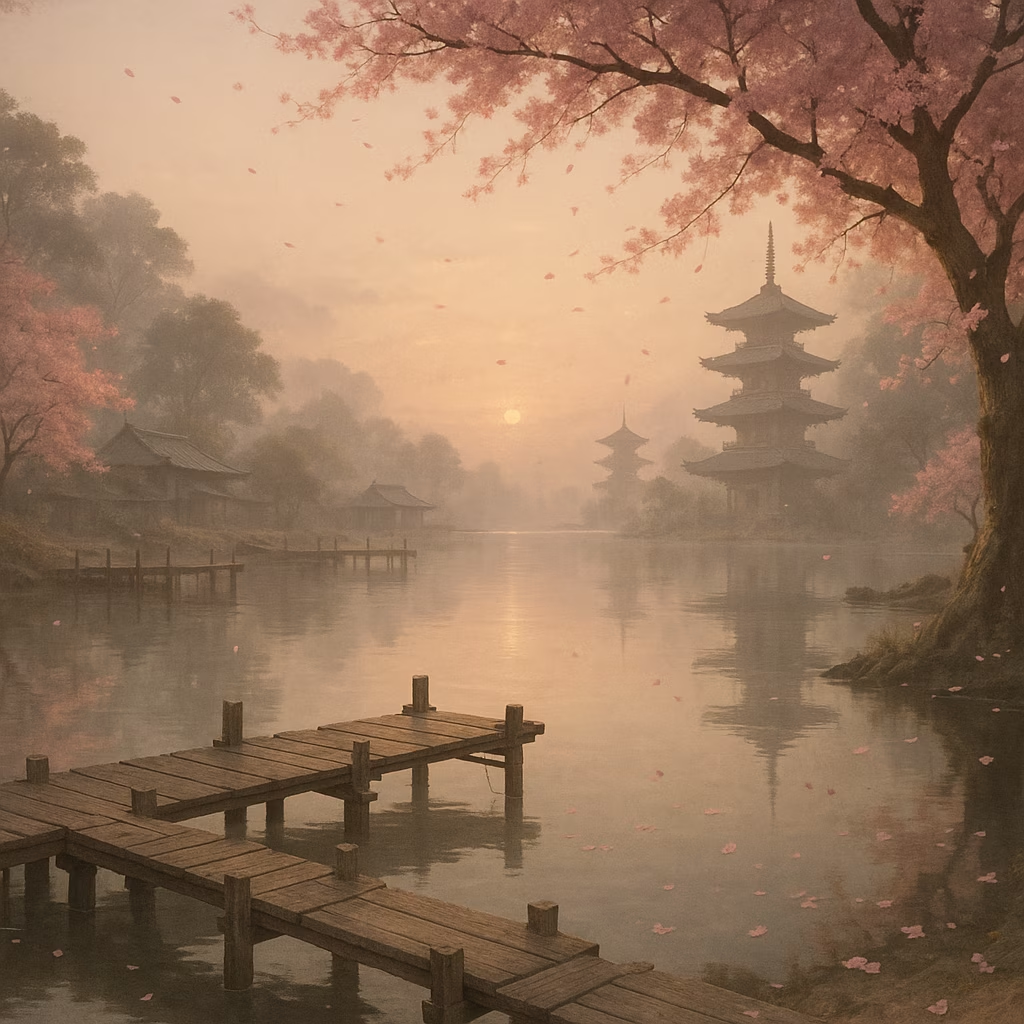
As I stand before the ancient Hogonji Temple, the morning mist clinging to the pagoda's curved roofs, I can't help but feel transported back to feudal Japan. The temple complex stretches before me, a serene oasis in the middle of the lake west of Nagahama city. Ubisoft has truly outdone themselves with this recreation - every moss-covered stone and carefully raked gravel path feels authentic to the period.
What draws me most to this place aren't just the beautiful structures, but the secrets hidden within. The temple serves as more than just a backdrop; it's a puzzle waiting to be solved. As I explore the grounds, I realize that finding the lost pages requires more than just running through the main paths - it demands careful observation and a willingness to climb where most pilgrims would never venture.
My first discovery comes unexpectedly. After climbing the stone stairs leading to the main temple building, I notice the viewpoint on the eastern pagoda beckoning me. But something catches my eye to the west - the traditional temizuya, the water purification fountain where visitors would cleanse their hands and mouth before prayer. Most would walk right past it, but intuition tells me to investigate further. As I hop onto the structure's roof, there it is - the first lost page, carefully placed as if waiting specifically for me to find it.
The second page proves more challenging. From my vantage point on the temizuya, I scan the main temple building. My eyes are drawn to the ornate roof, with its multiple tiers and decorative elements. Rather than heading for the obvious high points, I move westward and discover a small, almost hidden platform in the southwest corner. The weathered wood shows signs of age, with flecks of old paint clinging to the surface. There, nestled between the roof tiles, lies the second lost page.
What strikes me most about this temple exploration is how it mirrors real-life temple visits in Japan. The developers have captured that feeling of discovery I experienced when visiting actual temples - the sense that behind every corner, beneath every eave, there might be some hidden piece of history waiting to be uncovered.
The Rewards of Exploration:
-
🎯 500 EXP points that significantly boost my character's progression
-
💡 1 Knowledge Point that unlocks new abilities for both Nao and Yasuke
-
🏯 Deeper understanding of Japanese religious architecture and practices
-
🗺️ Increased familiarity with the game's navigation mechanics
As I prepare to leave Hogonji Temple, pages safely in my inventory, I realize that this is what makes Assassin's Creed Shadows special. It's not just about completing objectives - it's about immersing yourself in a world so richly detailed that every discovery feels meaningful. The temple has yielded its secrets to me, but I know there are countless more waiting throughout the Kansai region. Each shrine and temple promises new challenges and rewards, making me excited to continue my journey through this beautifully crafted version of feudal Japan.
The attention to detail in Hogonji Temple alone speaks volumes about the care Ubisoft has taken with this installation. From the way light filters through the ancient trees to the subtle sound of wind chimes in the distance, every element works together to create an experience that's both gameplay and cultural immersion. I find myself not just playing a game, but living a piece of history - and that's the greatest reward any temple exploration could offer.
According to coverage from GamesRadar+, immersive world-building and authentic historical settings are key factors that set modern action-adventure games apart. Their recent features on Assassin's Creed Shadows emphasize how the series' attention to architectural detail and environmental storytelling, as seen in the recreation of Hogonji Temple, elevates player engagement and deepens the sense of discovery throughout the game.
Comments