
Embracing the Shadows: A Return to Assassin's Creed Shadows with Nightmare's True Grit
I return to the world of shadows, not as an invincible specter, but as a mortal soul threading a needle through a tapestry of blades and eyes. The year is 2026, and the world I once knew in Assassin's Creed Shadows has been irrevocably transfigured. Gone are the days of effortless dominion, where I could wade through legions unseen, a ghost without consequence. A new covenant has been forged in the crucible of Nightmare Mode, and it demands not just skill, but reverence for the very art of disappearance. This is no mere difficulty setting; it is a rebirth, a promise that the shadows themselves are no longer a sanctuary, but a fragile, whispering ally whose trust must be earned with every held breath and calculated step.
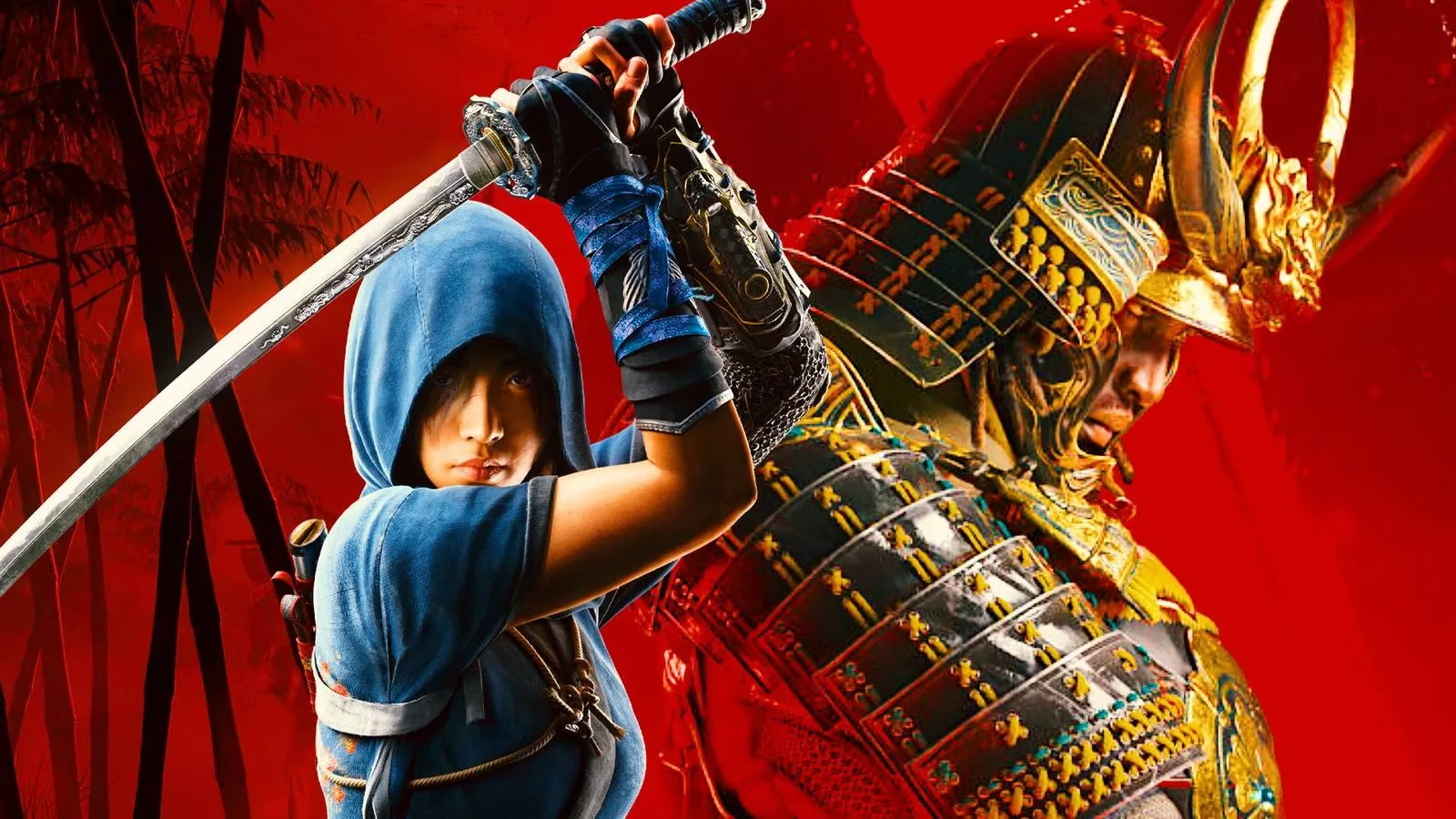
The Weight of a Whisper: Sound and Movement Redefined
Have you ever truly listened to the sound of your own crouching gait? In this new nightmare, I have. Every movement is a declaration. The faster Naoe creeps, the louder the world becomes—a rustle of fabric, a scrape of gravel, a heartbeat echoing too loudly in the silent dark. Sound is no longer ambient noise; it is a dynamic, unforgiving mechanic. A swift dash across a courtyard, once a trivial maneuver, now rings like a bell, drawing inquisitive gazes and drawn blades from guards who are no longer mere set dressing. This new auditory awareness is perhaps the most profound immersion. It ties my own impatience directly to consequence, forcing a rhythm of stop, listen, and proceed that feels less like a game and more like a desperate, vital dance.
The Eyes in the Dark: A World That Truly Sees
Remember when rooftops were a highway, and guards below were little more than ants oblivious to the eagle above? That age is a memory. The enemies in Nightmare Mode possess a chilling, almost intuitive awareness. That old tactic of leaping from beam to beam? It is a death sentence. Their gaze pierces the twilight; they spot movement above with a terrifying realism. The shadows themselves are fickle friends—they cling to you only in perfect stillness. The slightest shift, a twitch of the thumb, and the veil is torn. And should one guard's brow furrow in suspicion, it is never a solitary concern. Like a hive, their awareness spreads; an alert summons not one, but two, three, or more to investigate. Can you truly say you mastered stealth when you were never truly seen?
Strategy Over Strength: The Death of Guaranteed Assassination
This is the core, the beautiful, terrifying heart of the challenge. The crutch of Guaranteed Assassination has been shattered. My blade is no longer an absolute decree. Against powerful foes, the dreaded "deny assassination" prompt is a cold reminder of my own mortality and my character's true strength. Level, gear, and positioning are no longer suggestions—they are the holy trinity of survival. I must now, truly and deeply, plan. Charging into a fort is an elegant form of suicide. Every patrol path must be memorized, every line of sight calculated. I find myself studying enemy ranks and abilities from afar, identifying who can be felled from the dark and who must be lured, isolated, or avoided entirely. The game has become a chessboard painted in moonlight and blood.
-
Route Planning is Mandatory: Blind running equals instant death. Scouting is not optional; it is the first and most important mission.
-
Environmental Mastery: Bushes, tall grass, and architectural cover are not decorative. They are essential tools, and using them strategically is the difference between success and a reload screen.
-
Character Synergy: The forced switches between Naoe and Yasuke in missions were once narrative beats. Now, they are tactical primers. In free play, using Yasuke's brute strength to create a diversion so Naoe can slip through a side gate is not just clever—it is necessary. Their builds require meticulous, complementary attention.
A Legacy of Challenge: Nightmare vs. The Ghosts of Modes Past
Let us be honest: what was once called "Expert" mode now feels like a nostalgic dream, a gentle tutorial for the storm to come. Veteran players of the genre could navigate it with muscle memory. But this Nightmare? It stands apart, not just in Shadows, but in the entire lineage of the Creed. It is a challenge that whispers to the masochistic perfectionist in all of us, a gauntlet thrown down to those who claimed the stealth had lost its teeth. Enabling it transforms Naoe from a supernatural force into a true assassin—vulnerable, precise, and profoundly lethal in her authenticity. And for those who crave open conflict, pairing it with Nightmare combat elevates every brawl to a desperate, exhilarating struggle for survival.
The Call to Return: A New Playthrough Awaits
So, to you who set the blade down, disillusioned by a world that bowed too easily, I extend not a critique, but an invitation. The game you left is gone. In its place is something richer, darker, and infinitely more rewarding. This mode is not a patch; it is a re-consecration of the game's soul. It demands a new playthrough or a fervent return to old saves, promising to make you re-experience every story beat through the lens of genuine tension and hard-won triumph. Your previous mastery will be tested, your strategies reinvented. The castles will feel taller, the nights darker, and every successful infiltration will taste sweeter than any before.
The shadows are deeper now, and they are waiting. Not to hide you, but to test you. Will you answer the call?
Comments