
Dancing with Afflictions: How Bleed, Poison, and Daze Rewired My Assassin’s Creed Shadows Combat
I still remember the moment my blade first drew blood in the darkened streets of Kyoto. Not the ordinary crimson splash—no, this was different. A crimson droplet icon appeared above the guard’s head, slowly filling like a balloon being stretched to its limit. My heart raced as I realized I had stumbled into the intricate web of afflictions in Assassin’s Creed Shadows, a system that has transformed combat from a simple clash of steel into a chess match of cumulative pressure.
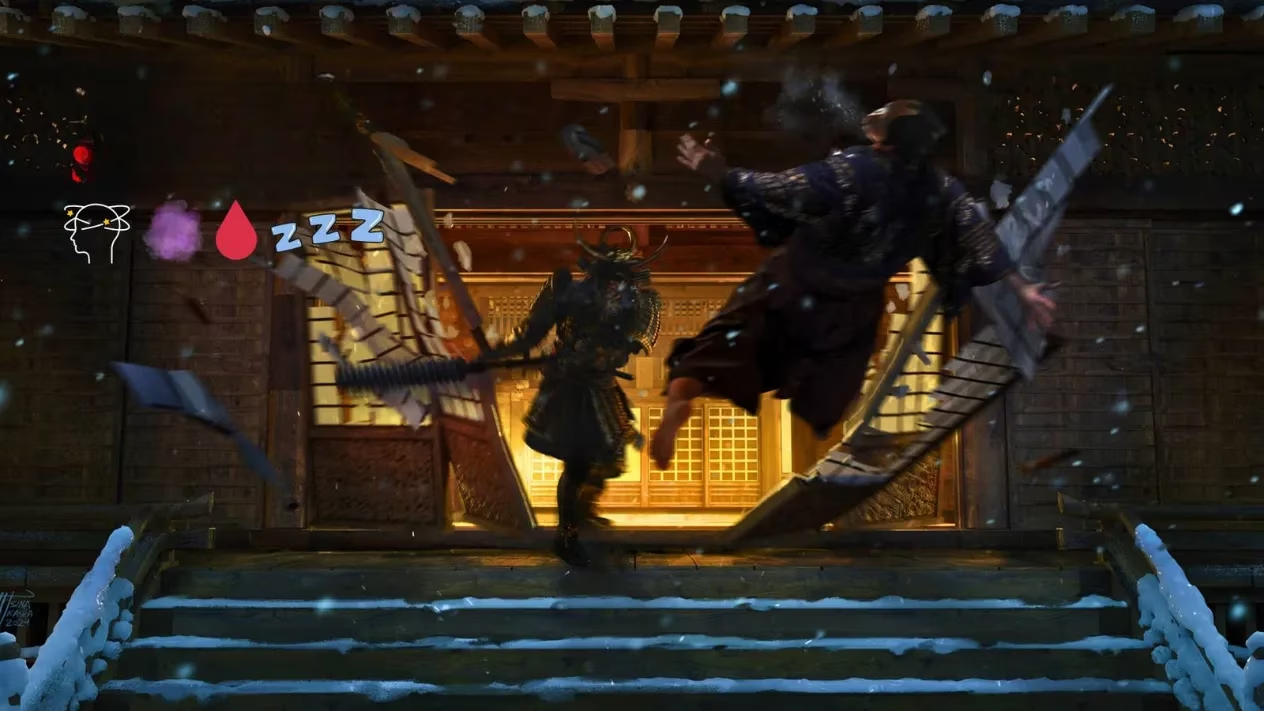
It was 2026, and I was twenty hours deep into the game, chasing a high-level ronin who had carved his name into the province with a blade heavier than my character Naoe could lift on a bad day. My gear was mismatched, my level lagging behind his by a full seven digits. In any ordinary encounter, I’d be a moth meeting a lantern. But then I noticed the Bleed affix on my tanto. With each slice, that blood-drop icon crept toward completion, a silent metronome counting down to catastrophe. When it finally burst, it wasn’t just damage—it was as if I had snipped the main artery of a tightly wound clock spring, releasing a torrent of bonus damage that turned what should have been a death sentence into a two-strike execution. Bleed is a patient assassin’s scalpel: you layer on the buildup like a painter applying thick impasto, and then you watch the health bar collapse under the weight of your artistic pressure.
The beauty of afflictions in Assassin’s Creed Shadows lies not just in their raw power, but in how they force you to rethink combat flow. Each weapon can roll with a percentage of affliction buildup as an attribute, meaning you’re not just picking your favorite blade—you’re choosing the emotional arc of every fight. I began to experiment, and the next revelation came drenched in a sickly purple hue.
Poison crept into my arsenal on a moonless night in an enemy camp. I had a kusarigama that carried a poison buildup stat. As the white skull symbol on a samurai’s head graduated to a full purple circle, the effect felt akin to pouring a slow-acting acid into his bloodstream—subtle at first, then devastatingly corrosive. Over time, chunks of his health melted away while he staggered, vomiting, his attack patterns interrupted like a broken music box. Poison doesn’t just harm; it humiliates. It’s the perfect tool for softening up a group when you’re outnumbered, turning one enemy into a walking biohazard that can’t even defend itself. I would tag a heavy with poison, let the damage-over-time do its work, and pivot to another target, returning only when the toxin had reduced his guard to a shivering mess.
But the affliction that truly rewired my neural pathways was Daze, represented by a star symbol that blooms above an enemy’s head. I first used a daze-infused katana against a trio of ninjas in a bamboo thicket. When the star filled, it was as if I had broadcast raw static directly into their central nervous system. Their swings carved empty air, their dodges became aimless stumbles, and they couldn’t block my follow-up combos. Daze is chaos incarnate—imagine inserting a ball of aluminum foil into a finely tuned engine; everything still runs, but with a glorious metallic rattle that turns motion into accident. It’s particularly brilliant when you’re fighting multiple foes. A dazed enemy stops being an opponent and becomes a temporary shield of confusion, allowing you to deal with their allies while they flail at shadows.
Then there’s the outlier, the brute-force punctuation mark of the affliction family: Knock-out. Unlike the others, it’s not about gradual buildup. I executed it as Naoe, grabbing a unaware guard from behind and applying a chokehold that sent him into a long, blissful slumber. Yasuke can trigger it with certain naginata abilities, too. Once an enemy collapses, they are incapacitated for a significant window, giving you total freedom to chain attacks without reprisal. In a boss fight against a deformed warlord, I paired a knock-out from a stealth approach with a rapid bleed combo—the target never regained consciousness. It felt less like combat and more like a surgical procedure where the patient was already ethically compromised.
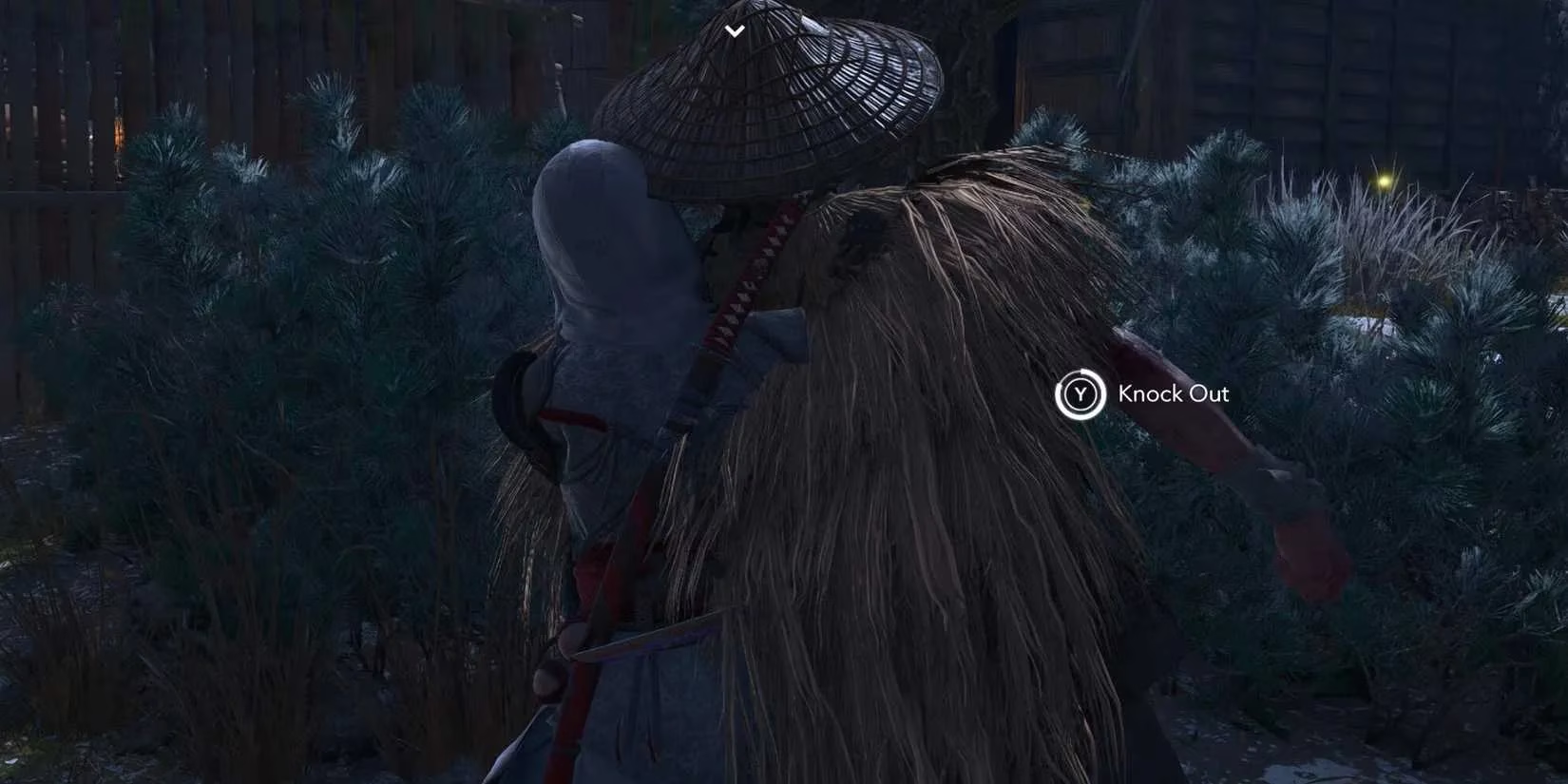
The genius of Assassin’s Creed Shadows’ affliction system is that it’s not just a buff—it’s a narrative device that lets you write your own underdog story. I’ve crafted builds where my weapon spread poison like infectious gossip, while my backup tool inflicted bleed for that final burst. Against elites with massive health bars, I’d open with a knock-out to cancel their initial onslaught, stack bleed until it erupted, and then finish them while they choked on their own toxicity. Every encounter felt like conducting a malevolent symphony, each affliction a different section of the orchestra, building toward a crescendo of defeat.
What I’ve learned in 2026 is that these status effects are the great equalizer. When you’re under-leveled and staring down a mountain of hit points, raw damage becomes a dull hammer. But afflictions? They are the lockpicks that turn impossible encounters into elegant puzzles. The next time you find yourself gravely outmatched, don’t just sharpen your blade—poison it, make it sing with daze, or let it whisper promises of a quick bleed. You won’t just survive; you’ll dance.
Comments