
Assassin's Creed Shadows: The RPG That Breaks the Brotherhood-Templar Mold
When I first booted up Assassin's Creed Shadows back in 2025, I expected another deep dive into the age-old conflict that's been the series' backbone. I mean, for nearly eight years, since Origins dropped in 2017, that's been the name of the game—massive open-world RPGs centered on the Assassin-Templar war. Origins gave us the birth of the Hidden Ones in Ptolemaic Egypt, Odyssey took us back to the roots of the Order of the Ancients, and Valhalla showed us the literal birth of the Templar Order itself. So, jumping into Feudal Japan, I was ready for the next chapter in that millennia-spanning saga. But Shadows? It's the odd one out, and honestly, that's what makes it so damn fascinating.
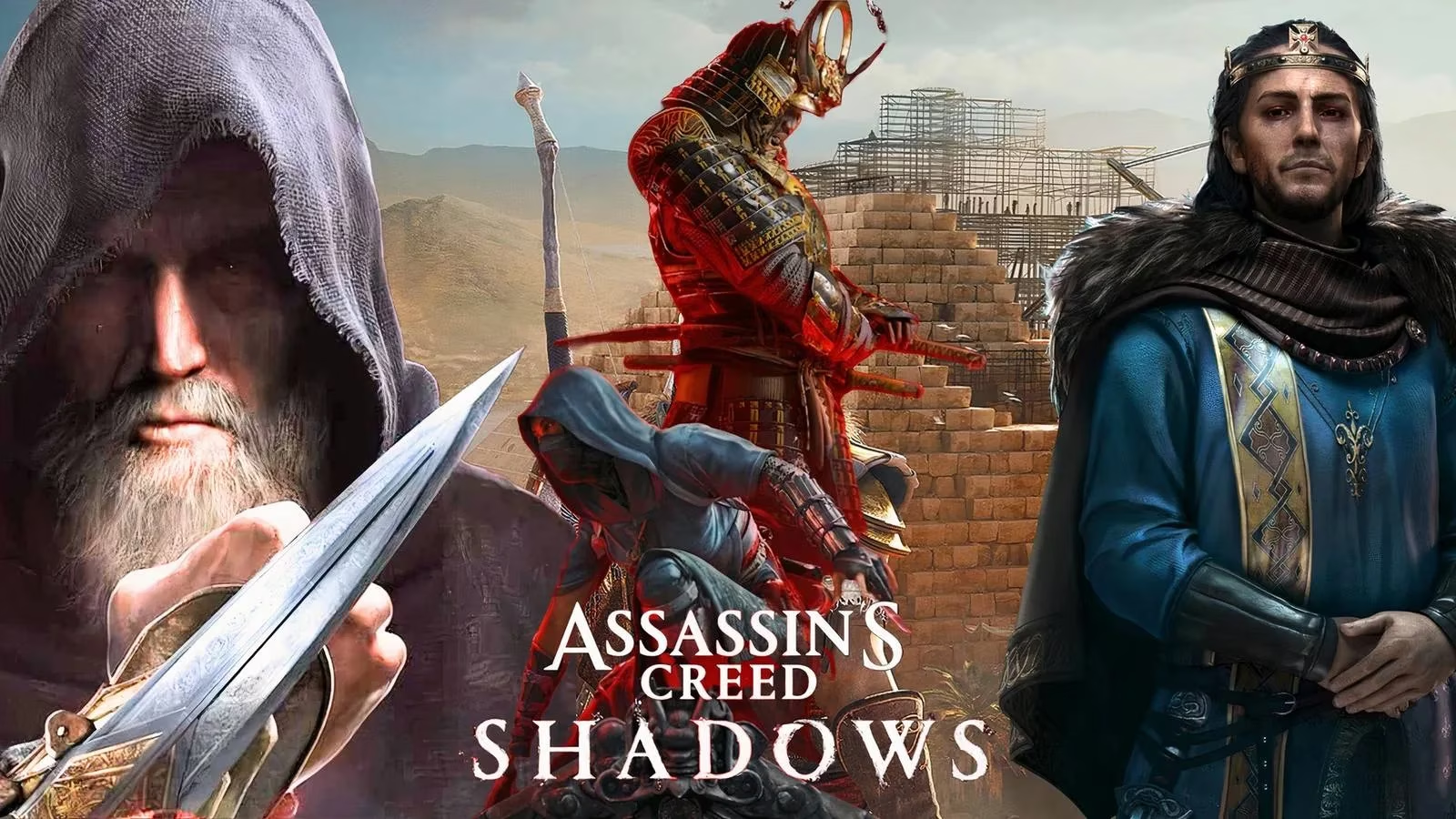
Let's rewind for a sec. The modern AC RPG era was built on fleshing out this conflict. Origins wasn't just a title; it was a promise. We witnessed Bayek and Aya, heartbroken and betrayed, forge the Hidden Ones from the ashes of personal tragedy. Their fight against the Order of the Ancients—with its 'Father of Understanding'—was the core. Odyssey, despite being a prequel, tied the Misthios's story to the first Hidden Blade wielder, Darius, and the early Order. Then came Valhalla, which was a massive deal. We didn't just fight the Order of the Ancients; we saw King Alfred the Great dismantle it and rebuild its remnants into the Templar Order we all love to hate. That's huge, world-defining lore!
So, rolling into Shadows in 16th-century Japan, I had my checklist ready:
-
✅ New Assassin Brotherhood lore
-
✅ Templar scheming
-
✅ Major Isu artifact macguffin
-
✅ Philosophical clashes about free will vs. order
But the game had other plans. For the first time in a modern AC RPG, the Assassin-Templar war feels like the backdrop, not the main stage. Sure, our protagonists are connected to it. Naoe's parents were part of the original Japanese Brotherhood, the Kakushiba ikki, founded by an excommunicated Spanish Assassin—a cool bit of global connective tissue. And Yasuke? His backstory as a former slave to the Portuguese Rite of the Templar Order adds a brutal, personal dimension to the conflict. He even learns about the fall of the Borgias (hello, AC2 nostalgia!).
But here's the kicker: while they encounter members and deal with the factions, the game's heart isn't about the grand, organizational development of these groups. We get the establishment of their presence in Japan, but not a deep dive into their evolution like in the previous RPGs. The focus is squarely on Naoe and Yasuke's personal journeys, their unique dynamic, and the unification of Japan. The Assassins and Templars are players in this political theater, but they aren't always the lead actors. It's a different vibe—more personal, more grounded in its specific historical moment.
| Game | Era | Primary Contribution to Assassin/Templar Lore |
|---|---|---|
| AC Origins | Ptolemaic Egypt | Founded the Hidden Ones (Assassin precursors) |
| AC Odyssey | Ancient Greece | Showcased early Order of the Ancients & first Hidden Blade |
| AC Valhalla | Viking Age England | Transitioned Order of the Ancients into the Templar Order |
| AC Shadows | Feudal Japan | Established the factions' presence in Japan |
This shift was a bit of a mind-bender at first. After years of games where the Brotherhood's growth was front and center, Shadows feels almost... subdued in that regard. But you know what? It works. It makes this corner of the AC universe feel distinct. Japan's story isn't about the founding of a new branch; it's about how these eternal ideologies operate within a rich, closed ecosystem. The conflict is there, simmering, but it's woven into the fabric of the Sengoku period's chaos.
Of course, the story isn't over. The upcoming Claws of Awaji Expansion might swing the focus back toward a more traditional emphasis on the Assassins and Templars. And the ongoing Assassin's Creed: Shadows – Iga no Monogatari prequel manga is sure to fill in more gaps about the Brotherhood's early days in Japan. But as of 2026, the base game of Shadows stands as a fascinating experiment. It proves that an Assassin's Creed RPG can have a killer, immersive world and compelling characters without making the millennia-old secret war the sole driving force of the narrative.
In a way, Shadows is a breath of fresh air. It's like the series took a step back to say, 'Hey, remember the people in this conflict?' By not constantly expanding the organizational chart, it gave Naoe and Yasuke room to breathe and become memorable protagonists in their own right. Their struggles with loyalty, duty, and identity hit harder because they aren't always overshadowed by the weight of the entire Brotherhood's destiny. For a series built on a conflict of ideas, Shadows reminds us that those ideas are nothing without the individuals who fight, bleed, and believe in them. And that, in my book, is a pretty slick move.
Comments