
Assassin's Creed Shadows: How a Game Revived My Love for the Franchise in 2026
Let's be honest, by 2026, the Assassin's Creed series had become a bit of a running joke for some of us long-time fans. Remember the good old days? Scaling the rooftops of Renaissance Italy, getting into bar fights in colonial Boston, or even trying to navigate the bug-ridden but beautiful streets of revolutionary Paris? Ah, Unity, you were misunderstood. But then came the 'RPG era,' and for a while, it felt like the heart of the series had been traded for a sprawling, bloated map and an endless grind. Odyssey felt like a beautiful but exhausting vacation where you had to walk everywhere, and Valhalla? Don't get me started on Eivor's parkour skills—or lack thereof. It was like watching a bear try to do ballet. Mirage promised a return to roots but ended up feeling more like a shallow puddle than a deep well. So, when Assassin's Creed Shadows was announced, my enthusiasm was, let's say, cautiously pessimistic. Could this really be any different?
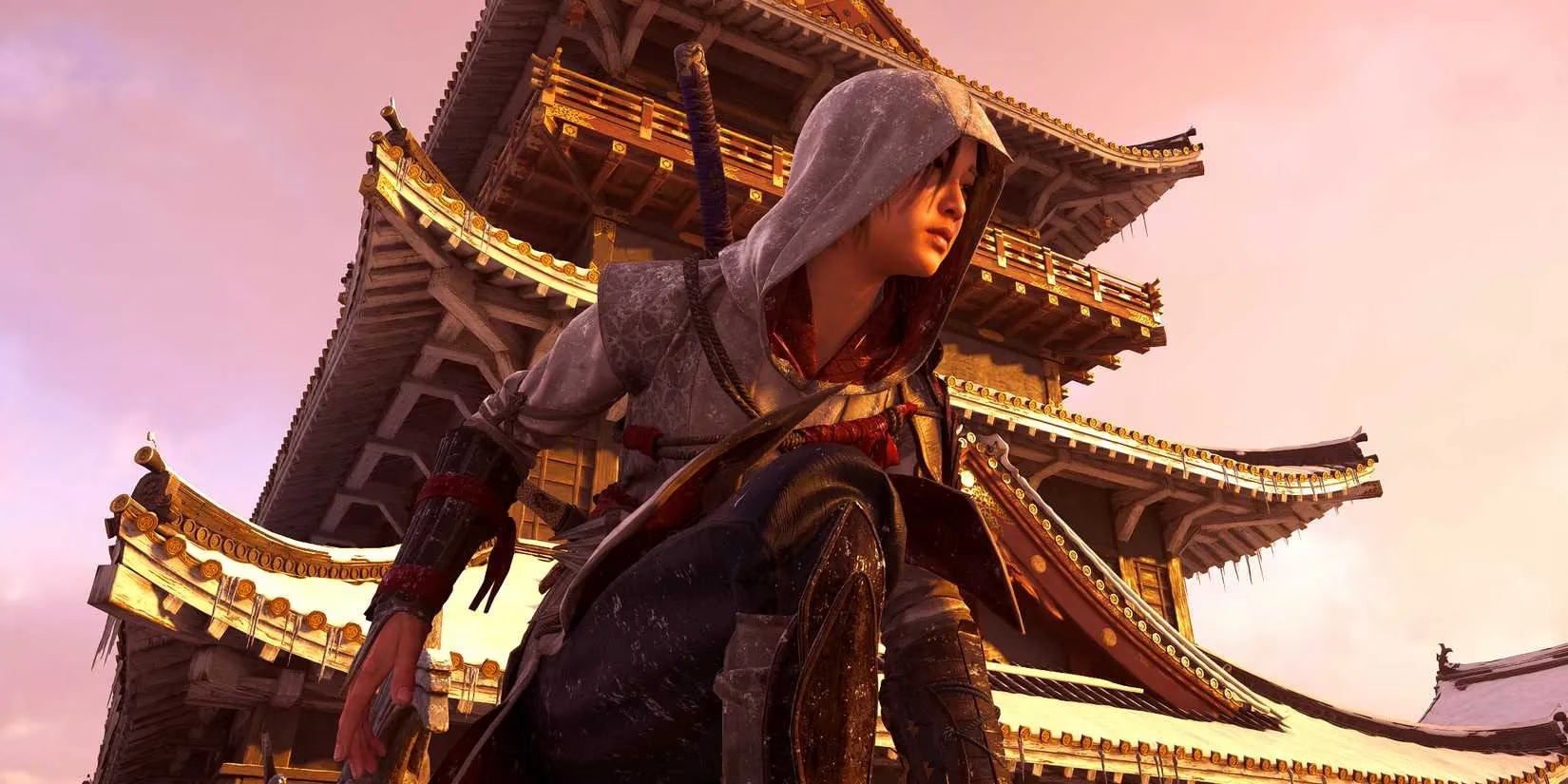
Boy, was I wrong. Playing Shadows in 2026 felt like rediscovering a favorite old book, but with stunning new illustrations and a far better plot. The most immediate and welcome change? The world didn't feel designed to swallow you whole. Remember booting up Valhalla and being presented with a 'tutorial area' the size of a small country? Or Odyssey's first island that seemed to take a week to cross? Shadows does something brilliantly simple: it gives you a linear, cinematic prologue. It introduces you to Naoe and Yasuke, lets you get a feel for their unique styles, and then sets you loose. And that open world? It's guided. Mountains and hills create natural pathways, making exploration feel intentional and rewarding, not like a chore where you're just ticking off question marks. It’s a masterclass in world design that says, "Here are some cool things to find," instead of, "Good luck finding the fun in this 200-hour slog."
But a manageable world is nothing without compelling gameplay. And here, Shadows doesn't just improve; it revolutionizes. Stealth is back, baby, and it's better than ever. Playing as Naoe is an absolute joy. Her movement is fluid, her toolkit is diverse and satisfying to use, and the enemy AI is finally smart enough to provide a genuine challenge. It's tense, it's strategic, and it feels like being an assassin again, not just a warrior who occasionally crouches. And then you have Yasuke, who delivers pure, unadulterated power fantasy. Swapping between them isn't just a gimmick; it fundamentally changes how you approach every situation. It’s like having two fantastic games in one.
Let's break down the key improvements Shadows made over its immediate predecessors:
| Feature | Odyssey/Valhalla/Mirage | Shadows | The Verdict |
|---|---|---|---|
| World Scale | Overwhelmingly vast, often feeling empty or bloated. | Carefully crafted, guided exploration with intentional design. | ✅ A huge win for pacing and enjoyment. |
| Stealth Mechanics | Often clunky, an afterthought to combat. | The core of Naoe's gameplay, refined and deeply engaging. | ✅ Finally, stealth matters again! |
| Parkour | From serviceable (Origins) to awful (Valhalla). | Smooth, responsive, and a genuine pleasure to use. | ✅ A return to form. |
| Narrative Focus | Meandering stories with pacing issues. | More cinematic, character-driven, with a compelling dual protagonist structure. | ✅ You actually care about what happens. |
| Player Respect | Laden with MTX, season passes, and FOMO tactics. | A complete, polished experience at launch with no predatory monetization. | ✅ The most important change of all. |
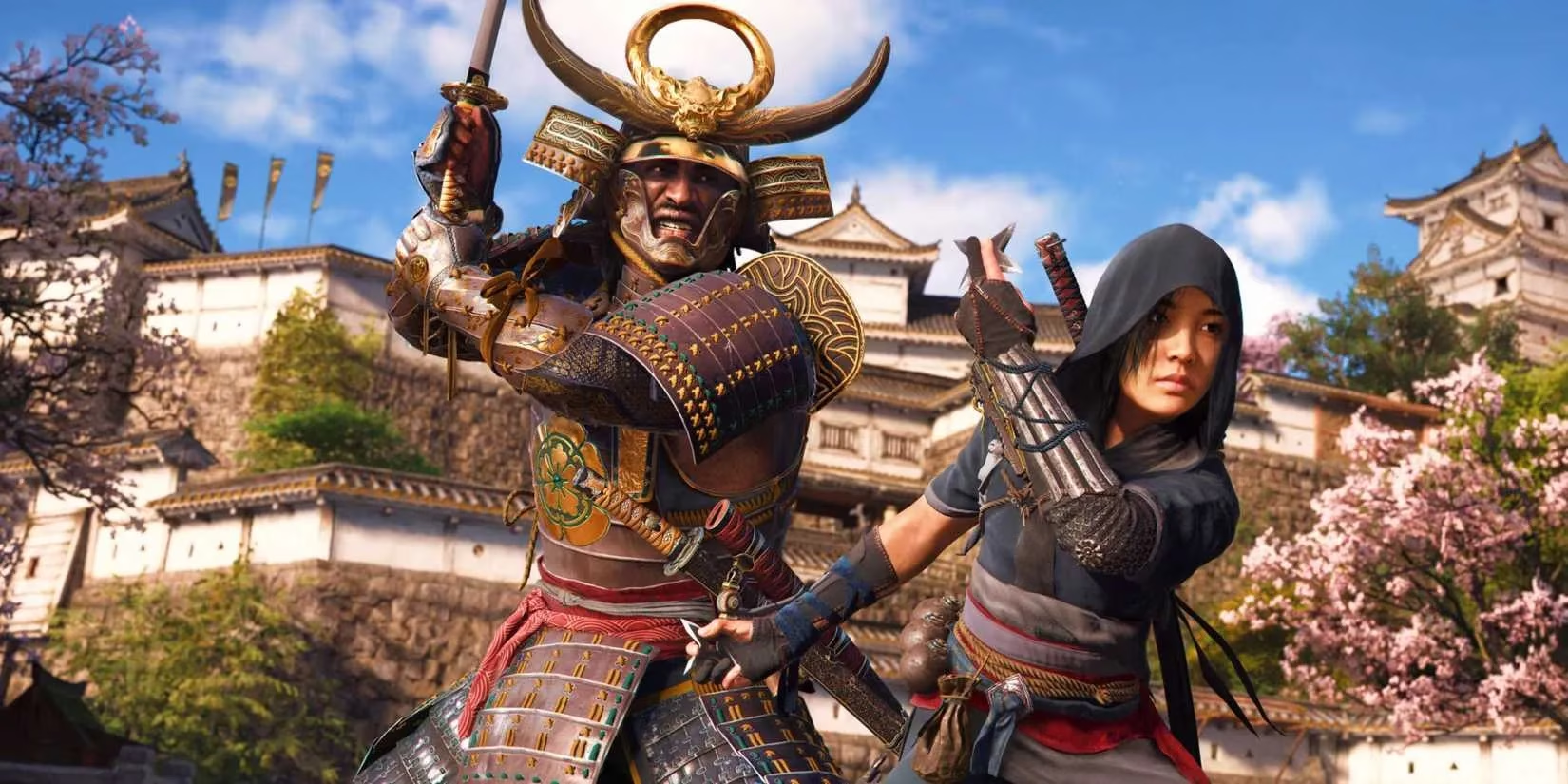
So, what's the secret sauce? It seems Ubisoft finally did their homework. Shadows is a clear, intelligent evolution. It looks at the RPG trilogy and asks, "What worked? What didn't?" It keeps the satisfying progression and the segmented narrative structure that works for an assassination sandbox, but it ruthlessly cuts the fat. The side activities have purpose; world events give meaningful rewards, and side quests tell interesting stories. The changing seasons and more reactive NPCs make the world feel alive in a way that previous games only pretended to.
Perhaps the most significant lesson from Shadows isn't even about game design—it's about philosophy. In an industry still plagued by crunch and cynical monetization in 2026, Ubisoft took a stand with this game. They delayed it until it was ready. They removed the intrusive microtransactions and season passes. They focused on making a great game, not just a great platform for sales. This approach protected the developers and resulted in a product that players could respect and love without reservation.
Is Shadows perfect? Of course not. The combat, while improved, could still use some refinement, and the difficulty balancing has its quirks. But these are nitpicks in what is otherwise a stellar package. The question now is, what's next? Will Ubisoft see Shadows as a lucky one-off, or will they use it as the blueprint for the future? For the sake of the franchise—and for tired gamers everywhere—I sincerely hope it's the latter. Shadows didn't just give me a great game to play; it gave me back my hope for Assassin's Creed. And in 2026, that's a victory more valuable than any hidden blade.
Comments