
Assassin's Creed Shadows: A Look Back at Launch Success, Cultural Sensitivity, and Player Feedback
As I reflect on the journey of Assassin's Creed Shadows from its launch to now in 2026, it's fascinating to see how initial noise often gives way to a more nuanced understanding of a game's true impact. Despite all the pre-launch discourse, the game carved out its own successful path. The latest entry in this legendary series secured a strong position, sitting comfortably as the second-highest launch in recent memory, right behind Valhalla, with a player count soaring around 2.2 million at its peak. While some voices were raised questioning certain creative choices, the reception from Japanese players, reviewers, and even fellow developers was largely positive and appreciative of the setting. It makes you wonder, doesn't it? How much of the online conversation truly reflects the experience of those engaging with the game firsthand?
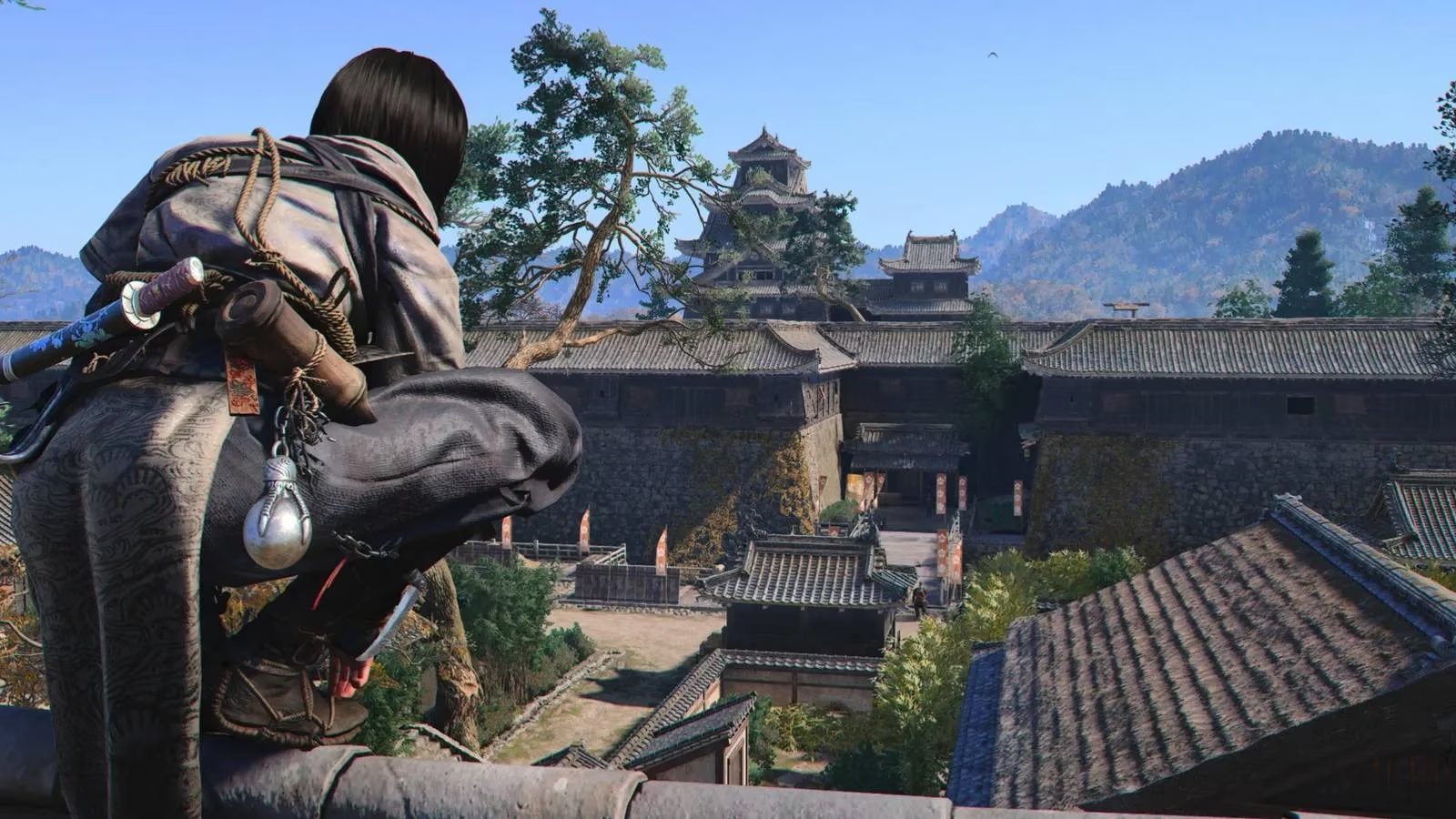
Now, let's talk about one of the more interesting post-launch chapters. Remember the uproar about destructible shrines? That wasn't just internet chatter; it had real-world consequences. It turned out that during development, when the team was implementing the game's dynamic destructible environments, the inner sanctums of the shrines were inadvertently included in that system. This wasn't a feature designed for desecration—players couldn't actively choose to destroy a shrine. However, if you got into a fight nearby or even rolled against certain objects inside, items within the sacred space could shatter, just like any crate or pot in the open world.
The issue wasn't intent, but oversight. The developers likely saw these objects as part of the general environmental clutter, not considering the deep cultural and religious significance they held. This oversight prompted officials from the real-life Itate Hyozu Shrine to pursue legal action, a serious matter that Ubisoft addressed with remarkable speed. The destructible elements were completely removed from the shrines via the game's day-one patch, resolving the situation promptly.
What does this tell us about modern game development? I believe it highlights a critical learning curve in handling culturally rich settings. Here’s a quick breakdown of the key events:
-
The Oversight: Shrine interiors tagged as destructible during environmental design.
-
The Reaction: Legal action from shrine officials highlighting the cultural insensitivity.
-
The Response: Ubisoft's swift patch to remove the feature entirely before most players even encountered it.
This incident stood in stark contrast to other, more manufactured controversies. It showed that when presented with legitimate, culturally grounded feedback, the development team was not only listening but was also willing to act decisively to correct course. This proactive approach deserves recognition.
The voice of Naoe, actor Masumi, later added a poignant personal layer to this event. In an interview, she expressed her own disappointment upon learning about the initial inclusion of the feature. For someone intimately connected to the project and its cultural context, it was a moment that underscored the importance of mindfulness. She noted that while the destruction wasn't deliberate, the team ideally should have been more aware of the sentiments such an action could hurt. Her reflection wasn't about casting blame, but about emphasizing the weight of responsibility that comes with portraying another culture's sacred spaces.
Looking back from 2026, the saga of Assassin's Creed Shadows offers several clear takeaways for the industry and for us as players:
-
Launch Success is Multifaceted: Player counts and engagement often tell a more accurate story than social media trends.
-
Cultural Depiction Requires Diligence: When building worlds based on real cultures, especially those with living traditions, every element—even systemic ones like physics—must be considered through a cultural lens.
-
Responsiveness Matters: The speed and seriousness with which Ubisoft handled the shrine issue set a positive precedent for developer-community (and in this case, developer-cultural custodian) relations.
-
The Human Element: Insights from actors like Masumi remind us that these projects are made by people who often care deeply about getting things right, and missteps can be genuinely disappointing for them too.
In the end, Assassin's Creed Shadows will be remembered not for its controversies, but for its lush depiction of feudal Japan and its solid place in the franchise's legacy. The shrine incident, now firmly in the past, serves as a valuable case study. It’s a reminder that in our interconnected world, game development isn't just about code and assets; it's about respect, understanding, and the willingness to listen and adapt. Isn't that a lesson worth carrying forward into all the virtual worlds yet to be built?
Comments