
Assassin's Creed Shadows: A $116 Million Gamble That's Paying Off for Ubisoft
Looking back from 2026, it's clear that the journey of Assassin's Creed Shadows was one of high stakes and, ultimately, high rewards. I remember when the news broke about its massive production budget exceeding €100 million, roughly $116 million USD. In a year where Ubisoft was reeling from nearly $178 million in fiscal losses, largely due to the disappointment of Star Wars Outlaws and the shutdown of XDefiant, that price tag seemed like a monumental risk. But as I've played through the rich, immersive world of feudal Japan, I can see exactly where that investment went—and why it's become a cornerstone for Ubisoft's financial recovery.
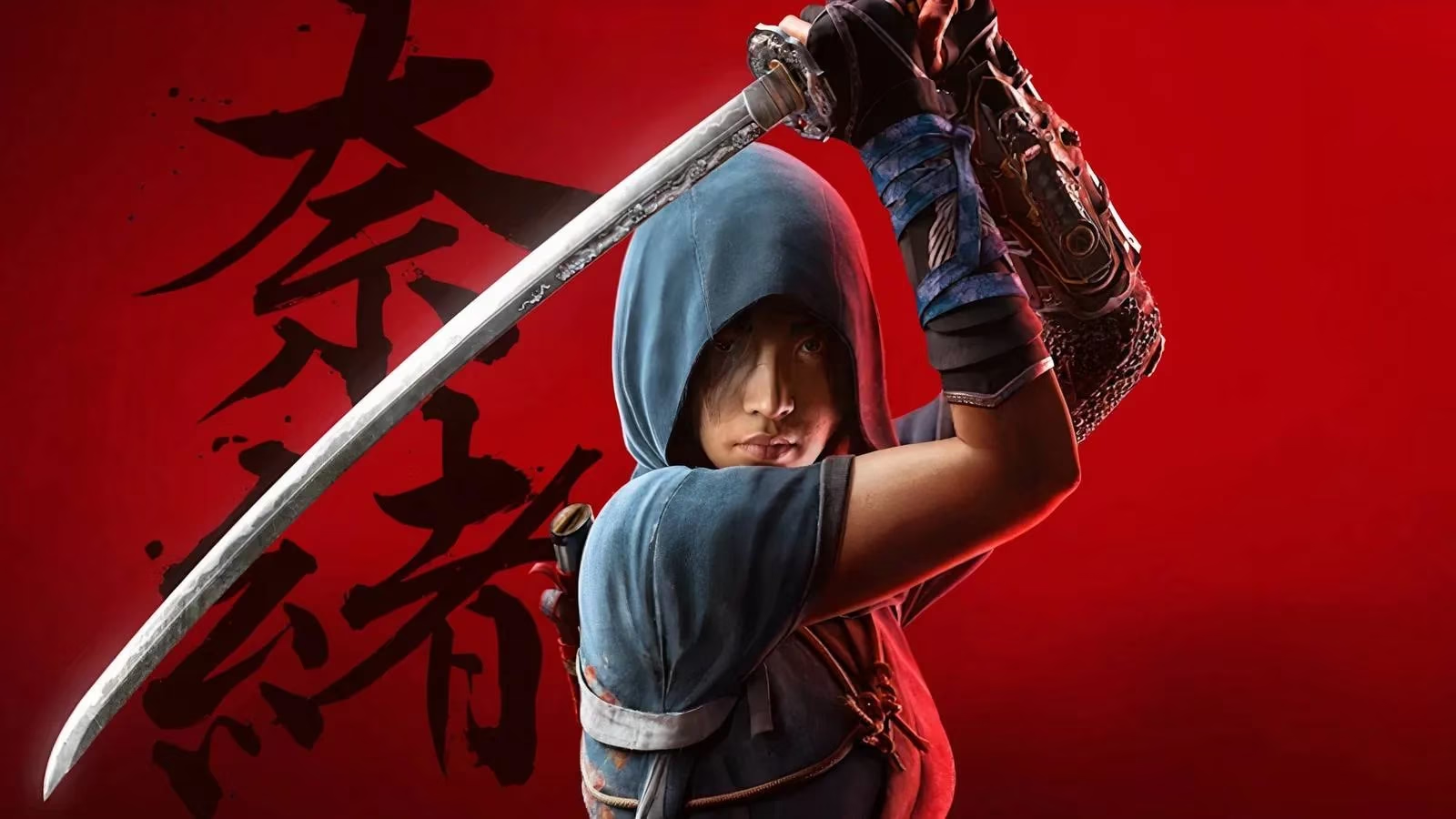
The Budget Breakdown: Where Did All the Money Go?
CEO Yves Guillemot was candid about the expenditure, even if the company keeps the final, precise figures under wraps. That hefty sum of over $116 million wasn't just for creating the game; it encompassed a whole spectrum of costs:
-
Development & Production: The core of building this massive open world.
-
Marketing & Distribution: Getting the word out and the game onto shelves and digital stores.
-
Engine Overhaul: A significant chunk, as Guillemot hinted, was poured into upgrading the game's engine. This wasn't just a polish; it was a foundational rebuild to deliver the stunning visuals and complex mechanics we see today.
While this places Shadows firmly among the top 30 most expensive games ever made, it's fascinating to put it in perspective. When you look at industry titans like Genshin Impact (with projections nearing $900 million) or Monopoly GO (reportedly the first to crack the $1 billion budget mark), Ubisoft's investment, while huge, was comparatively focused.
Launch Success and Market Performance
The payoff was almost immediate and incredibly strong. Ubisoft announced that the launch day sales for Assassin's Creed Shadows were historic. While they didn't give a specific number, they confirmed it was the second-biggest launch day in the entire franchise's history, trailing only the mammoth success of Assassin's Creed Valhalla from 2020. 😲
Independent analysis from Circana's Retail Tracking Service backed this up, revealing that for the first quarter of 2025, Shadows was the second-best-selling title overall, only behind the phenomenon that was Monster Hunter Wilds. This wasn't just a good launch; it was a blockbuster event that dominated the sales charts.
| Metric | Performance | Context |
|---|---|---|
| Launch Day Sales | 2nd Biggest in Franchise History | Behind only AC Valhalla (2020) |
| Q1 2025 Sales | 2nd Best-Selling Title | Behind Monster Hunter Wilds |
| Budget | > $116 Million | Among top 30 most expensive games ever |
Why This Game Was a Financial Lifeline
In the context of Ubisoft's rocky 2024-2025 fiscal year, Assassin's Creed Shadows wasn't just a successful game; it was a strategic necessity. The company's financial report painted a bleak picture, with losses attributed to other projects failing to meet expectations. Shadows, alongside the steady performance of the Rainbow Six franchise, became the beacon of hope.
From my experience, the game's quality justifies the faith. The investment in the engine is palpable—the lighting in bamboo forests, the dynamic weather over ancient castles, and the fluid, dual-character gameplay of samurai and shinobi create an unparalleled sense of place and purpose. This wasn't a cheap reskin of a previous title; it was a deliberate, expensive, and lovingly crafted new chapter. The critical and commercial reception proved that players recognized and rewarded that effort.
The Long-Term Outlook from 2026
Now, in 2026, we can see the long-term impact Guillemot and Ubisoft were banking on. Assassin's Creed Shadows did more than just sell well at launch. It:
-
Reinvigorated the franchise with a fresh, highly requested setting.
-
Stabilized Ubisoft's financial narrative, providing a reliable revenue stream through ongoing content updates and strong digital sales.
-
Justified high-budget production for single-player, narrative-driven experiences in an era often dominated by live-service models.
The game stands as a testament to the idea that a well-executed, premium blockbuster with a clear vision can still be a tremendous financial and cultural success. While the initial budget news caused anxiety among fans worried about Ubisoft's future, Shadows ultimately delivered on its promise. It transformed from a costly gamble into a celebrated masterpiece and a financial boon, securing its place not just in the annals of the Assassin's Creed saga, but as a key turning point for its publisher. The world of feudal Japan it built wasn't just a backdrop for a game; it became the foundation for Ubisoft's path forward.
Comments